Making Mealtime Fun for Kids
6 min read
Published on 13 Nov 2024
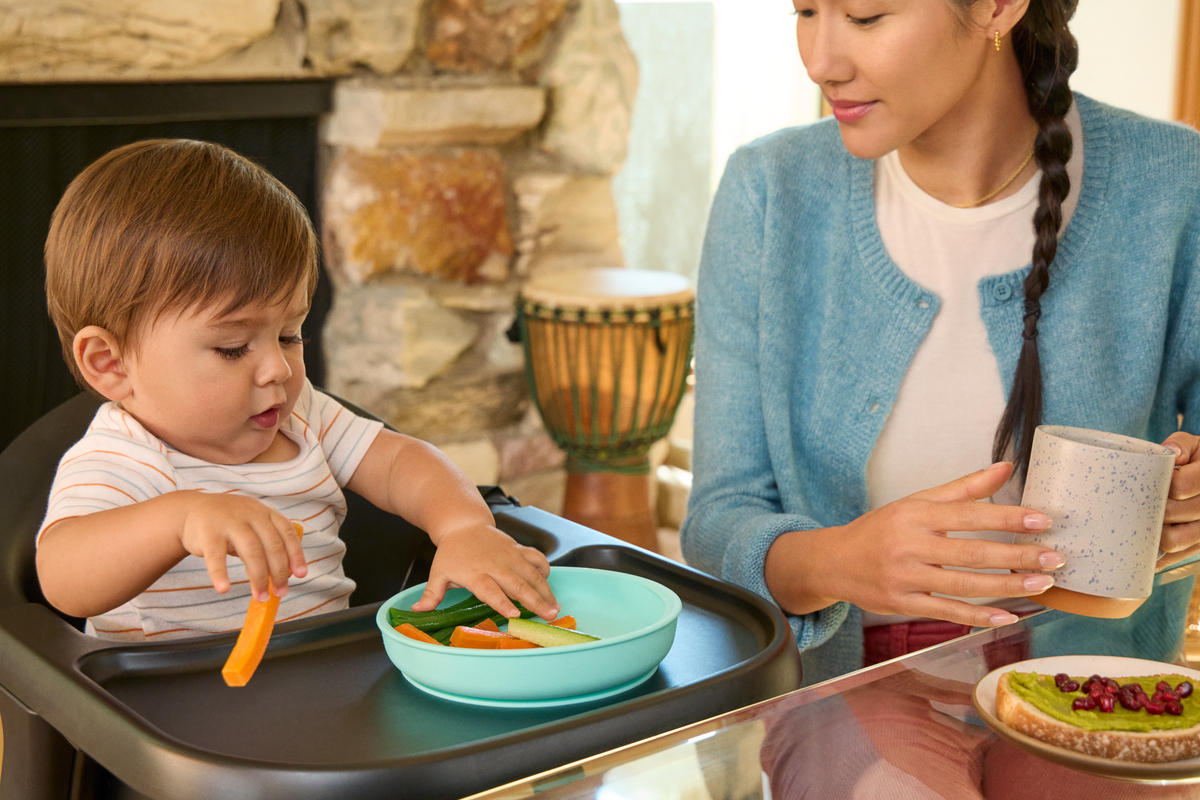
If parenting had a Bingo card, photos of your baby’s first bite (or more accurately taste) would be on it. There are few firsts that are more documented. What follows, though, often goes from cute and photogenic to messy and exhausting. Feeding little ones takes up a lot of time. There is the preparation: the steaming and pureeing or, for baby-led weaning whole foods, the precise slicing and chopping. There is the set up: readying the high chair and silicone bowls, plates, water cups, and utensils, of which there are so many to choose from. Then there is the actual feeding, the cleanup - although Suction Bowls and Plates make spills or food fights a lot less likely - and all of the research that goes into deciding on each aspect of the process. Plus, shortly after starting solids, that process quickly multiplies into at least three meals and two snacks a day.
It’s a lot, but thankfully there are many experts using their platforms to ease the process, including Tanya Steel, the creator of the Healthy Lunchtime Challenge with Michelle Obama, and author of the award-winning book Real Food for Healthy Kids. Steel dispels a lot of common misconceptions parents have about feeding their young children, from just serving up their favorite foods to not insisting on the clean plate club, on Munchkin’s StrollerCoaster podcast, during the “Food and Nutrition” episode.
The number one misconception? When parents “think of their kids in the way that they were brought up and underestimate their palates.” “I would really advise every parent out there, whether you're dealing with babies, young kids, older kids, to be experimental with your kids. Let them explore the world of food,” Steel explains.
Kids might not like something the first time they try it but don’t give up on that food. “It does take a child's palate up to 12 times to taste something in order for them to start to kind of appreciate it and understand it,” Steel says. “So, in my house, we had already always instituted the ‘no thank you’ bite where they needed to just to try something new up to 12 times before. And if they didn't like it after 12, I was like, ‘No worries. You don't like Brussels sprouts. Gotcha.’”
Getting kids involved in planning their own meals can help get them excited about new food and mealtimes. “I think the biggest way of getting kids to take power over their food and diet is saying to them, ‘I think that you should plan dinners on Wednesday night,’” Steel explains. “You can say this to a four-year-old and the four-year-old will say ‘macaroni and cheese’ or something. Then you could make a healthy macaroni and cheese, saying to them, ‘You choose and we're going to make it together.’ Taking them to the supermarket, buying the ingredients, taking them into the kitchen, and giving them age-appropriate tasks — you make that dinner together. Then you can sit down and eat it and really kind of revel over it and ask, ‘How was your day? Tell me about what happened.’ And that is the moment. You're introducing the notion of mealtime being pleasurable family time and talking about interesting things that are happening.”
There’s not a high age limit to how old children have to be to get involved in meal preparation; even young toddlers can be involved in making food. “Obviously babies are a little bit more difficult, but I think as soon as they are toddlers, you can give them things that they can do that are easy,” Steel suggests. “So, for instance, stirring a wooden spoon in a bowl would be super fun for them. Shredding lettuce is super easy for them. I think as soon as they can really kind of talk and walk easily and understand and follow directions — like two or three — that's when you're fine to bring them in and have them do little tasks.”
Another way to positively look at mealtime is that the mess isn’t all bad. It has its benefits too, like sensory and tactile exposure. “For the kids, it’s part of the joy,” Steel says. “Like who doesn't love to be in sand and mud or getting your hands in wet dough. That's part of the tactile enjoyment for kids. So, you do kind of have to go with it and not worry about the mess. You'll go clean it up.”
Along these lines, try not to bring emotion to the dining table. “One thing is to not tie food up with emotion,” Steel says. “I think that's something that's very important. You know, so many of us have grown up using food as a solace and that's not a great thing to do.”
Don’t force the clean plate club. “I would really recommend not insisting on the clean plate club,” Steel says. “Kids are like cats, they'll eat what they want and then they're full. You should let them listen to their internal monitor about when they're full. When they're full, they're full.”
Preventing picky eaters starts with the parents. “If you want your kids to eat healthfully, you need to model it yourself. It starts with you. So, if you're standing there in the kitchen and giving them broccoli, but you don't like broccoli and you're like, ‘Oh, I don't like that smell.’ That's not a good message,” Steel says. “This kid would be dipping broccoli and hummus ordinarily, but you have just stopped them from doing that.
Raising healthy eaters also comes back to the parents, which is why it’s best to avoid keeping the foods you don’t want your kids eating in the house. “Juices that are sugary don't need to be in the house — just generally things that are not good,” Steel says. “One of my mottos is ‘If I can't pronounce it, then I don't want it in my body.’ Things that are highly processed, you don't want to give that. You're already introducing kids to whatever they want to eat that's in the house is good for them so they can eat what they want. So that's a way to not make it a battle.”
Instead of using food as a reward, try offering vegetables in new ways. “Find vegetables that your child likes,” Steel says. “Include them in the cooking of, say, sweet potatoes, which are delicious to everybody and are a superfood. Maybe you two make roasted sweet potatoes one day and you drizzle a little maple syrup and some sea salt on it and stick it in the oven. That would be delicious. And then he tastes it and he's like, ‘Oh, my goodness, this is the most delicious thing I've ever had.’ That's a vegetable.”
Lastly, rather than look at feeding little ones as a chore, try to see it as an opportunity to educate them about the world, different cultures, languages, science, and math. “It's actually much easier now than it used to be because now in a food court, for instance, the world is food,” Steel says. “Food is such a global melting pot. We are one big world with many different flavors and many different histories.”
As far as math goes, Steel suggests that through baking, “You can start fractions early.” “Saying, ‘What's two cups plus two cups?’ You're going to show it,” Steels says. “We're going to do it visually and you're going to see that equals four.”
The biggest takeaway when it comes to mealtime with children, according to Steel? “Be creative when you're with your kid and do it with a sense of humor, not worrying about the mess. Because at the end of the day, it's going to be messy, and you are probably tired and stressed out when you end up cooking with your kids. So, try to remember that you're making a memory and an experience — and that is a beautiful thing.”
Marissa Muller