How to Transition Your Baby from Bottle to Sippy Cup
12 min read
Published on 30 Sept 2026
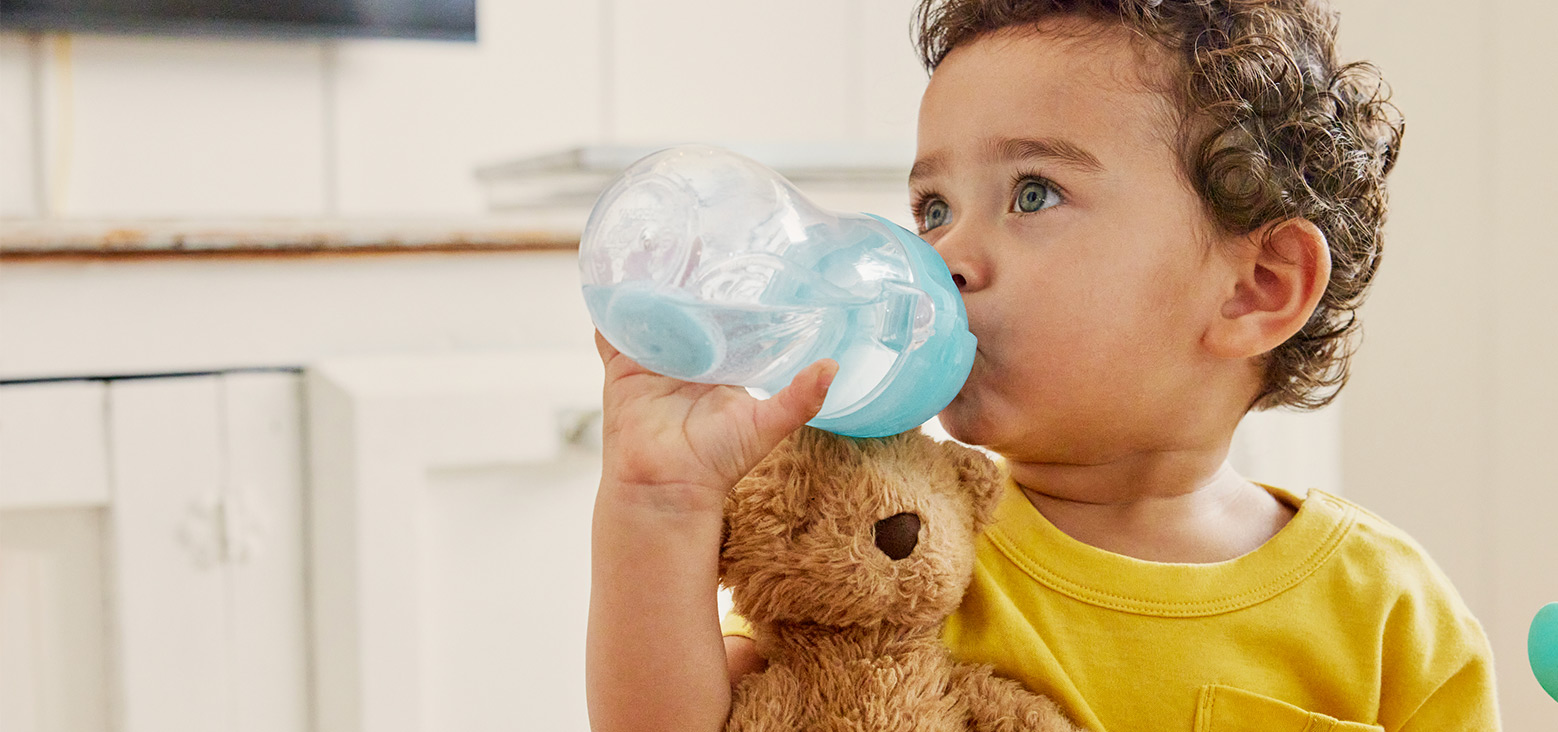
You can introduce a cup when your baby starts solid foods, usually around 6 months, and aim to retire the bottle between 12 and 18 months. Start by replacing one daytime bottle with a cup. Add another swap once your baby is comfortable with the change, and save the bottle tied most closely to sleep or comfort for last.
Regular practice and a predictable routine can help your baby build cup skills without making every feed feel like a struggle.
When should you switch from a bottle to a cup?
Around 6 months, cup use is mainly a learning opportunity. Your baby can practice holding, tipping, and drinking while breastmilk or infant formula continues to provide their main nutrition.
The American Academy of Pediatrics recommends slowly reducing bottle feeds and completing the transition between 12 and 18 months. Starting before the first birthday gives your baby time to become familiar with a cup before more bottle feeds are removed.
The timeline below shows how cup practice and bottle weaning can progress:
| Age | Bottle-to-cup goal |
| Around 6 months | Introduce a cup with meals for water and practice |
| 6 to 12 months | Build cup skills while breastmilk or formula remains the main drink |
| Around 12 months | Continue replacing bottle feeds as cup skills develop |
| 12 to 18 months | Work toward retiring the bottle |
This timeline is a general guide. Your child may need more practice before each bottle feed can be replaced.
Why should you retire the bottle by 18 months?
Retiring the bottle by about 18 months can help protect your child’s teeth and support balanced eating habits. The concern is not the bottle itself. The concern is frequent or prolonged exposure of the teeth to milk, formula, juice, or other drinks.
When a child falls asleep with a bottle containing milk, formula, juice, or another carbohydrate-containing drink, the teeth can remain exposed to sugars for longer periods. Oral bacteria use these carbohydrates to produce acids that can weaken enamel and increase cavity risk. The American Academy of Pediatric Dentistry advises against nighttime bottle use beyond 12 months and frequent exposure to sugar-containing drinks.
Continued bottle use can also make it easier for toddlers to drink more milk than they need. Too much cow’s milk may reduce their appetite for meals and leave less room for iron-rich foods. Serving milk in a cup at regular meals and snacks can help limit frequent sipping throughout the day.
How do you transition from bottle to sippy cup or straw cup step by step?
The bottle to sippy cup transition is often easier when you replace one feed at a time. Wait until the first change feels settled before removing another bottle.
Step 1. Introduce the cup before removing a bottle
Offer the cup during a familiar meal before replacing a bottle feed. Let your baby practice holding, tipping, and drinking from it. The initial goal is learning how the cup works, not finishing a full serving.
Step 2. Replace one daytime bottle
Choose a bottle feed that is not strongly tied to waking, sleep, or comfort. A midday or afternoon bottle may be easier to replace than the first bottle of the morning or the bedtime bottle.
Offer the usual drink in a cup while keeping the rest of the routine familiar. Use the same chair, meal setting, and caregiver when possible. This limits how many changes your child needs to manage at once.
Step 3. Offer the cup consistently
Continue offering the cup at the same meal or snack each day. A predictable opportunity helps your child recognize when the cup is used.
Your child may drink less from the cup during early practice. For babies younger than 12 months, continue meeting their breastmilk or formula needs while they learn. Consider waiting until the current change feels manageable before replacing another bottle feed.
Step 4. Replace another bottle when the first change feels settled
Once your child accepts the first cup feed comfortably, choose another daytime bottle to replace. Some children adjust quickly, while others need more time before they are ready for the next change.
There is no fixed number of days between each swap. Make one clear change at a time and watch how your child responds.
Step 5. Choose a cup your child can practice with
The right cup can do more than replace a bottle. Some cup designs are made to help children practice the skills they need for the next stage of independent drinking.
Munchkin offers several options that support different parts of the transition:
- Honey Bear Gentle Transition First Straw Cup: The squeezable cup in a “honey bear” design with a high-flow valve allows parents to gently squeeze liquid up the straw, helping a child understand how straw drinking works.
- Any Angle™ Weighted Straw Cup: The weighted straw follows the liquid as the cup moves, which can help children practice straw drinking while holding the cup at different angles during the transition from a bottle or sippy cup.
- Miracle® 360° Spoutless Sippy Cup: This spoutless cup lets children drink from around the rim and can help them practice a more open-cup-like drinking motion before moving to a traditional open cup.
Families can explore the Munchkin cups collection and choose a cup that matches the skill their child is currently practicing.
Give your child several calm opportunities with one cup before switching designs. A new cup may take time to feel familiar.
Step 6. Leave the most comforting bottle until later
Many children associate their morning or bedtime bottle with closeness and reassurance. Removing these feeds first may create more resistance than starting with a daytime bottle.
Once daytime bottles are no longer part of the routine, begin changing the final comfort feed. Offer milk earlier in the evening and follow it with toothbrushing before sleep.
Replace the familiar bottle ritual with another predictable source of comfort, such as:
- A bath
- Toothbrushing
- A short book
- A song
- Rocking or cuddling
Keep the sequence consistent each night. Your child may continue asking for the bottle at first, but a familiar replacement routine can make the change easier to understand.
What can you do if your baby refuses the cup?
Cup refusal may happen because your baby is very hungry, tired, uncomfortable with the cup, or looking for the reassurance associated with a bottle. Avoid forcing the cup or turning practice into a struggle.
Try these adjustments:
- Choose a calm time: Offer the cup before your baby becomes extremely hungry or tired.
- Use a small amount: A lightly filled cup may be easier to hold and control.
- Model drinking: Let your baby watch you drink from a cup during meals.
- Check the cup: If the flow or design seems difficult for your baby to manage, another cup style may be easier to practice with.
- Take a brief break: End the attempt calmly and try again at the next planned opportunity.
Focus on regular, low-pressure practice rather than how much your baby drinks during one attempt.
What should you put in the cup at each age?
What goes in the cup depends on your child’s age. Water can support cup practice from around 6 months, while breastmilk or infant formula should remain the main drink until 12 months. Cow’s milk should not replace breastmilk or formula before a child’s first birthday.
The age-based guidance below keeps the transition clear:
|
Age |
What can go in the cup? |
| Around 6 to 12 months | Small amounts of water, breastmilk, or infant formula |
| From 12 months | Pasteurized whole cow's milk or a fortified, unsweetened dairy alternative with calcium and vitamin D may be introduced |
Breastmilk or infant formula should remain the main source of nutrition until 12 months. The CDC says children aged 6 to 12 months can have 4 to 8 oz of water per day. Cow’s milk as a drink should wait until 12 months.
After 12 months, whole milk can become part of a balanced diet. An appropriate fortified, unsweetened alternative may be considered with pediatric guidance because nutrient content varies across products.
Avoid using juice, sweetened milk, or sugary drinks to encourage cup acceptance. Water is an appropriate option for cup practice and between-meal thirst.
For more guidance after the first birthday, How to Wean Baby Off Formula and Whole Milk vs. Skim Milk.
When should you ask your pediatrician or dentist for help?
Ask for individualized guidance if your child:
- Regularly coughs, gags, or appears to have difficulty swallowing during drinks
- Refuses most fluids or has noticeably fewer wet diapers
- Continues relying heavily on bottles beyond 18 months
- Has dental pain or visible changes to the teeth
- Has growth, nutrition, feeding-development, or health concerns
If your child is actively choking and cannot breathe, cry, or make sounds, seek emergency help immediately.
Making the bottle-to-cup transition feel manageable
Bottle weaning is a series of small routine changes rather than one perfect switch. Consistent cup opportunities and age-appropriate support can help your child move forward at a manageable pace.
Frequently asked questions
Is it bad if my toddler still uses a bottle at age 2?
Bottle use beyond the recommended transition period can increase frequent exposure of the teeth to milk or other drinks. It may also reduce a toddler’s interest in meals. Speak with your pediatrician or dentist if your 2-year-old still relies heavily on bottles, especially at bedtime.
Can a baby skip the sippy cup and use an open cup?
Yes. A sippy cup is not a required step. Some babies move from a bottle to a straw cup or open cup. The CDC says children can start learning to use a lidless cup around 9 months. By about 12 months, they may be able to drink from one while an adult holds it.
Can teething, illness, or travel delay the bottle-to-cup transition?
If illness, travel, or another major routine change makes bottle weaning harder, you may choose to pause the next bottle swap until your child’s usual eating, drinking, and sleep routines are more settled. Contact your pediatrician if illness affects drinking or hydration.
Does bottle weaning mean your baby must stop breastfeeding?
No. Bottle weaning and breastfeeding weaning are separate transitions. A child can stop using bottles while continuing to breastfeed for as long as it works for the child and parent.
This article is for general informational and educational purposes only and is not intended as medical advice. Every child moves off the bottle at their own pace. Talk to your pediatrician or dentist if you have questions about timing, your child's teeth, or your child's nutrition during the transition, especially if your child was born prematurely or has any health condition.
References
- Centers for Disease Control and Prevention, Fingers, Spoons, Forks, and Cups - https://www.cdc.gov/infant-toddler-nutrition/mealtime/fingers-spoons-forks-and-cups.html
- American Academy of Pediatrics, From Bottle to Cup: Helping Your Child Make a Healthy Transition - https://www.healthychildren.org/English/ages-stages/baby/feeding-nutrition/Pages/Discontinuing-the-Bottle.aspx
- American Academy of Pediatric Dentistry, Policy on Early Childhood Caries: Consequences and Preventive Strategies -https://www.aapd.org/research/oral-health-policies--recommendations/early-childhood-caries-classifications-consequences-and-preventive-strategies/
- Centers for Disease Control and Prevention, Cow’s Milk and Milk Alternatives - https://www.cdc.gov/infant-toddler-nutrition/foods-and-drinks/cows-milk-and-milk-alternatives.html
- American Academy of Pediatrics, Why It’s Important to Take Care of Baby Teeth - https://www.healthychildren.org/English/ages-stages/baby/teething-tooth-care/Pages/How-to-Prevent-Tooth-Decay-in-Your-Baby.aspx
- Centers for Disease Control and Prevention, Foods and Drinks to Encourage - https://www.cdc.gov/infant-toddler-nutrition/foods-and-drinks/foods-and-drinks-to-encourage.html
- Centers for Disease Control and Prevention, Foods and Drinks to Avoid or Limit - https://www.cdc.gov/infant-toddler-nutrition/foods-and-drinks/foods-and-drinks-to-avoid-or-limit.html
Munchkin