Feeding Schedule With Solids and Formula: Bottle Guide
14 min read
Published on 4 Aug 2026
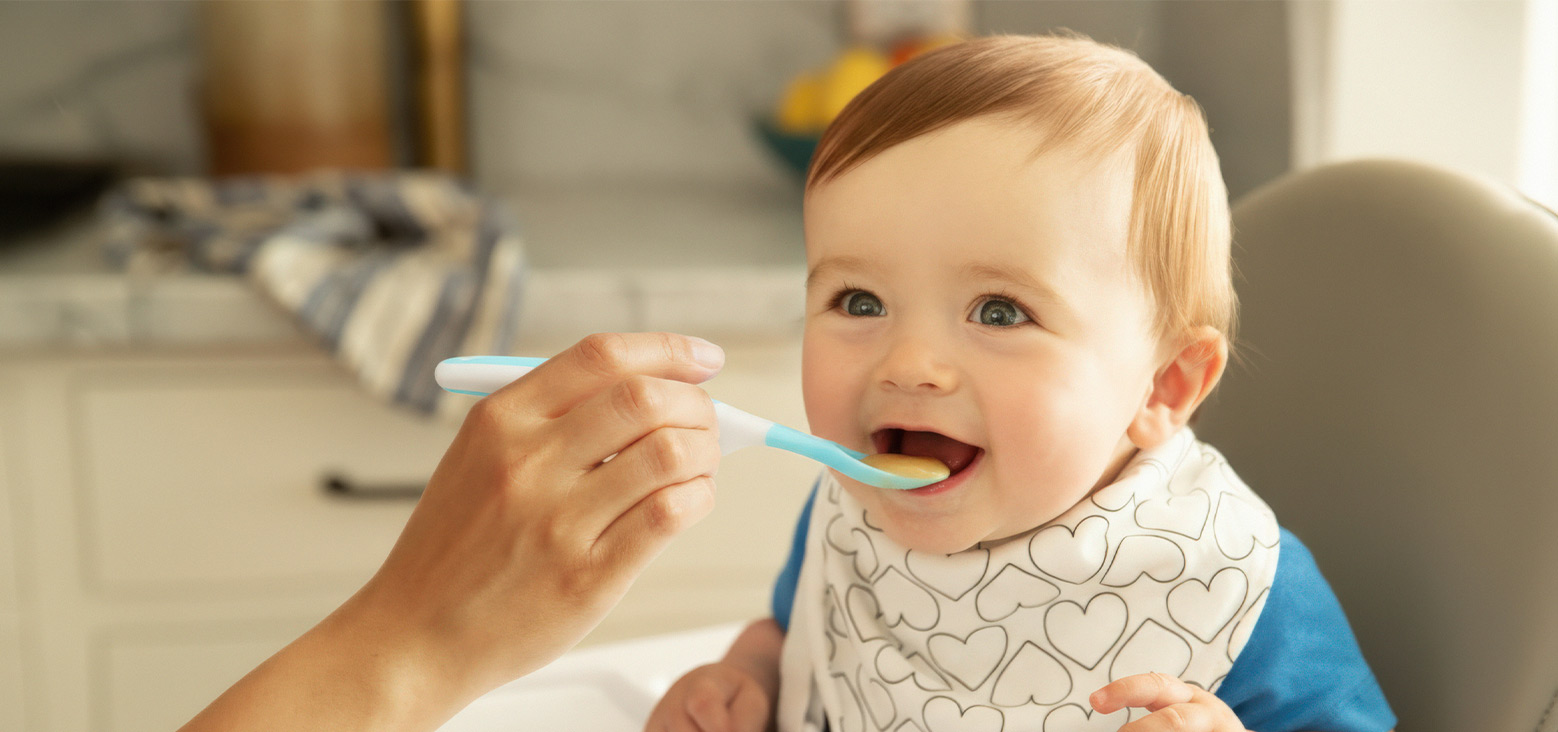
Balancing bottles and solid foods does not require a strict timetable. A feeding schedule with solids and formula should gradually add meals around your baby’s usual milk feeds. Breastmilk or infant formula remains your baby’s primary source of nutrition throughout the first year, while solid foods provide additional nutrients and help build eating skills.
Most babies begin solids at about 6 months. They may start with a few tastes or one small meal, then move toward more regular meals as their appetite and feeding abilities develop. Your baby’s schedule will depend on their readiness, milk intake, hunger cues, and daily routine.
When is your baby ready to start solid foods?
Your baby may be ready for solids when several developmental signs appear together. These skills help your baby sit safely, manage food in the mouth, and swallow.
Look for signs such as:
- Sitting upright alone or with support
- Holding the head and neck steady
- Opening the mouth when food is offered
- Reaching for or showing interest in food
- Swallowing food instead of pushing it out with the tongue
The American Academy of Pediatrics recommend introducing foods other than breastmilk or infant formula at about 6 months. Starting solids before 4 months is not recommended.
Readiness develops at a different pace for every baby. Speak with your pediatrician before starting solids if your baby was born prematurely, has difficulty sitting or swallowing, or has another health condition.
Read Munchkin’s guide to feeding stages from birth through 12 months.
Should you offer milk or solid foods first?
Early in the transition, offering breastmilk or formula before solids can help protect milk intake. A small milk feed may also prevent your baby from becoming too hungry or frustrated while learning to eat.
Some babies do well when solids are offered between regular milk feeds. You can offer more breastmilk or formula after the meal if your baby still shows hunger cues.
You do not need to follow the same order at every meal. The goal is to add solids gradually without replacing several breastfeeds or bottles at once.
The CDC states that solid foods gradually become a larger part of a baby’s diet from 6 to 12 months.
How does a feeding schedule with solids and formula change by age?
A baby feeding schedule with solids changes as meals become more established. Milk feeds remain frequent during the early months of solid feeding, while meals gradually increase in number and variety.
The table below shows a flexible age-based progression. It is not a required timetable.
|
Age |
Breastmilk or formula pattern |
Solid-food pattern |
Main feeding focus |
| Around 6 months | Continue your baby's usual breastfeeds or formula feeds | Begin with a few tastes or one small meal | Practice swallowing and explore new tastes |
| 6 to 9 months | Milk remains the primary source of nutrition | Gradually build toward two meals | Offer iron-rich foods and varied textures |
| 9 to 12 months | Continue milk feeds throughout the day | Work toward three meals as appetite and skills grow | Increase variety and encourage safe self-feeding |
| Around 12 months | Continue breastfeeding or discuss the formula and milk transition with your pediatrician | Meals and snacks become the main eating pattern | Join family meals and develop a varied diet |
Many formula-fed babies take four or five bottles around 6 months, although the number may change as bottle size, appetite, and solid-food intake change.
For formula-fed babies, the American Academy of Pediatrics notes that many babies take 6 to 8 fl oz at four or five feedings by 6 months. Most babies do not need more than 32 fl oz of formula in 24 hours. These figures are general reference points, not required targets.
In a sample menu for babies ages 8 to 12 months, HealthyChildren estimates that about 400 to 500 daily calories may still come from breastmilk or formula. For a formula-fed baby, this is roughly equivalent to 24 fl oz. Actual needs vary by growth, body size, appetite, and food intake.
The CDC notes that most formula-fed babies ages 6 to 12 months need formula or solid food about five or six times in 24 hours. Breastfeeding frequency may vary more widely.
|
The key takeaway: Begin with regular milk feeds and one small meal around 6 months. Add meals gradually as your baby becomes more comfortable eating solid foods. |
What can a baby feeding schedule with solids look like?
A practical schedule places meals around your baby’s usual milk feeds, naps, and wake times. The CDC recommends offering something to eat or drink every two to three hours as solid meals become established.
The examples below provide a starting rhythm, not a required timetable.
Sample feeding schedule for a 6- to 7-month-old
|
Approximate time |
Feeding |
| 7:00 a.m. | Breastfeed or bottle |
| 9:30 a.m. | Small solid meal |
| 12:00 p.m. | Breastfeed or bottle |
| 3:00 p.m. | Breastfeed or bottle |
| 6:00 p.m. | Breastfeed or bottle |
| Before bed | Breastfeed or bottle |
At this stage, the meal may include only a few spoonfuls or pieces of soft food. Some babies may prefer the meal between two milk feeds rather than at the exact time shown.
Sample feeding schedule for a 9- to 10-month-old
|
Approximate time |
Feeding |
| 7:00 a.m. | Breastfeed or bottle |
| 8:30 a.m. | Breakfast |
| 11:30 a.m. | Breastfeed or bottle |
| 1:00 p.m. | Lunch |
| 3:30 p.m. | Breastfeed or bottle |
| 6:00 p.m. | Dinner |
| Before bed | Breastfeed or bottle |
Nap schedules, childcare, appetite, and wake times may shift this routine. Some babies take milk closer to meals, while others prefer more space between them.
How much milk does your baby need after starting solids?
At about 6 months, many formula-fed babies drink roughly 24 to 32 fl oz per day. Intake usually decreases gradually as solid meals become more established. These amounts are general reference ranges, not targets every baby must reach.
Breastfed babies may continue nursing according to their usual pattern. Feeding frequency and milk intake can vary widely from one baby to another.
One larger meal does not automatically mean your baby is ready to drop a bottle or breastfeed. Know how to tell whether your baby is getting enough to eat for a broader look at milk intake, wet diapers, feeding behavior, and growth.
Look at feeding patterns over several days and watch for signs that intake remains adequate:
- Accepts milk feeds regularly
- Has a usual pattern of wet diapers
- Appears alert and responsive
- Seems satisfied after many feeds
- Continues growing as expected at pediatric visits
Contact your pediatrician if your baby suddenly refuses several milk feeds, has fewer wet diapers, appears unusually tired, or has difficulty swallowing.
How can you adjust the schedule as your baby eats more?
Increase solid meals gradually as your baby manages new textures and continues showing interest in food.
A few adjustments can help:
- Add another meal when your baby regularly shows interest at mealtimes.
- Begin with small portions and offer more when hunger cues continue.
- Stop when your baby turns away, closes their mouth, or loses interest.
- Expect appetite to vary during illness, teething, travel, or growth spurts.
- Contact your pediatrician if milk intake drops sharply or feeding becomes difficult.
The CDC recommends beginning with 1 or 2 tablespoons of food and offering more when a baby remains hungry. This allows the schedule to change according to your baby’s appetite rather than a fixed portion chart.
What feeding precautions should parents remember?
Keep these safety points in mind as your baby begins eating a wider range of foods:
- Do not give honey before 12 months because it can cause infant botulism.
- Do not use cow’s milk as your baby’s main drink before 12 months. Age-appropriate dairy foods may be introduced earlier.
- Prepare foods in safe shapes and textures. Avoid hard, round, sticky, or difficult-to-chew foods.
- Avoid foods and drinks with added sugars. Choose lower-sodium options where possible.
- Introduce common allergens, such as egg, peanut, dairy, wheat, sesame, soy, fish, and shellfish, in age-appropriate, baby-safe forms. Speak with your pediatrician before introduction if your baby has severe eczema, an existing food allergy, or a previous reaction.
For more guidance, listen to Munchkin’s StrollerCoaster episode “A Solid Start: Allergies and First Foods”, featuring double board-certified pediatrician and allergy specialist Dr. Zachary Rubin.
Frequently asked questions
What should you do if your baby drinks milk but refuses solid foods?
Continue regular breastfeeds or bottles while offering small amounts of food without pressure. Allow your baby to touch, smell, and taste the food, even if little is eaten.
Some babies need repeated exposure before accepting a new taste or texture. Speak with your pediatrician if your baby frequently coughs during meals, struggles to swallow, or makes little feeding progress.
Can starting solid foods help your baby sleep longer?
Starting solids does not reliably help every baby sleep longer. Sleep is affected by development, routines, temperament, and individual feeding needs.
Do not start solids early, add extra meals, or reduce milk feeds solely to encourage longer sleep.
Can you mix breastmilk or formula into solid foods?
You can use breastmilk or correctly prepared infant formula to thin cereal, purées, or mashed foods.
Always prepare formula according to the product label before adding it to food. Do not add extra formula powder to increase calories unless your pediatrician has provided specific instructions.
Can your baby drink water after starting solids?
Babies can begin having small amounts of plain water in an open or straw cup at about 6 months. Water can accompany meals and support cup-drinking practice.
Studies suggests offering 4 to 8 fl oz of water per day from 6 to 12 months. Water should not replace breastmilk or formula.
This article is for general informational and educational purposes only and is not intended as medical advice. Breastfeeding is recommended as the best source of nutrition for most infants, and breastmilk or formula remains the primary source of nutrition for the first year. Feeding amounts and timing vary from baby to baby; follow your baby's cues and consult your pediatrician about starting solids, feeding schedules, and introducing allergens, especially if your baby was born prematurely or has any health condition.
References
- Centers for Disease Control and Prevention, When, What, and How to Introduce Solid Foods -https://www.cdc.gov/infant-toddler-nutrition/foods-and-drinks/when-what-and-how-to-introduce-solid-foods.html
- American Academy of Pediatrics, HealthyChildren.org, When Can Babies Start Solid Foods? Readiness and Feeding Tips - https://www.healthychildren.org/English/ages-stages/baby/feeding-nutrition/Pages/starting-solid-foods.aspx
- Centers for Disease Control and Prevention, How Much and How Often to Feed - https://www.cdc.gov/infant-toddler-nutrition/foods-and-drinks/how-much-and-how-often-to-feed.html
- American Academy of Pediatrics, HealthyChildren.org, Amount and Schedule of Baby Formula Feedings - https://www.healthychildren.org/English/ages-stages/baby/formula-feeding/Pages/amount-and-schedule-of-formula-feedings.aspx
- American Academy of Pediatrics, HealthyChildren.org, How Much Formula Does My Baby Need? - https://www.healthychildren.org/English/tips-tools/ask-the-pediatrician/Pages/How-much-formula-does-my-baby-need.aspx
- American Academy of Pediatrics, HealthyChildren.org, Sample Menu for a Baby 8 to 12 Months Old - https://www.healthychildren.org/English/ages-stages/baby/feeding-nutrition/Pages/sample-one-day-menu-for-an-8-to-12-month-old.aspx
- American Academy of Pediatrics, HealthyChildren.org, Baby Food and Feeding - https://www.healthychildren.org/English/healthy-living/growing-healthy/Pages/baby-food-and-feeding.aspx
- Centers for Disease Control and Prevention, Foods and Drinks to Avoid or Limit - https://www.cdc.gov/infant-toddler-nutrition/foods-and-drinks/foods-and-drinks-to-avoid-or-limit.html
- American Academy of Pediatrics, HealthyChildren.org, When to Introduce Egg, Peanut Butter, and Other Common Food Allergens to a Baby - https://www.healthychildren.org/English/healthy-living/nutrition/Pages/when-to-introduce-egg-peanut-butter-and-other-common-food-allergens-to-your-baby-food-allergy-prevention-tips.aspx
Munchkin