Formula Feeding Chart: How Much and How Often by Age
11 min read
Published on 25 Aug 2026
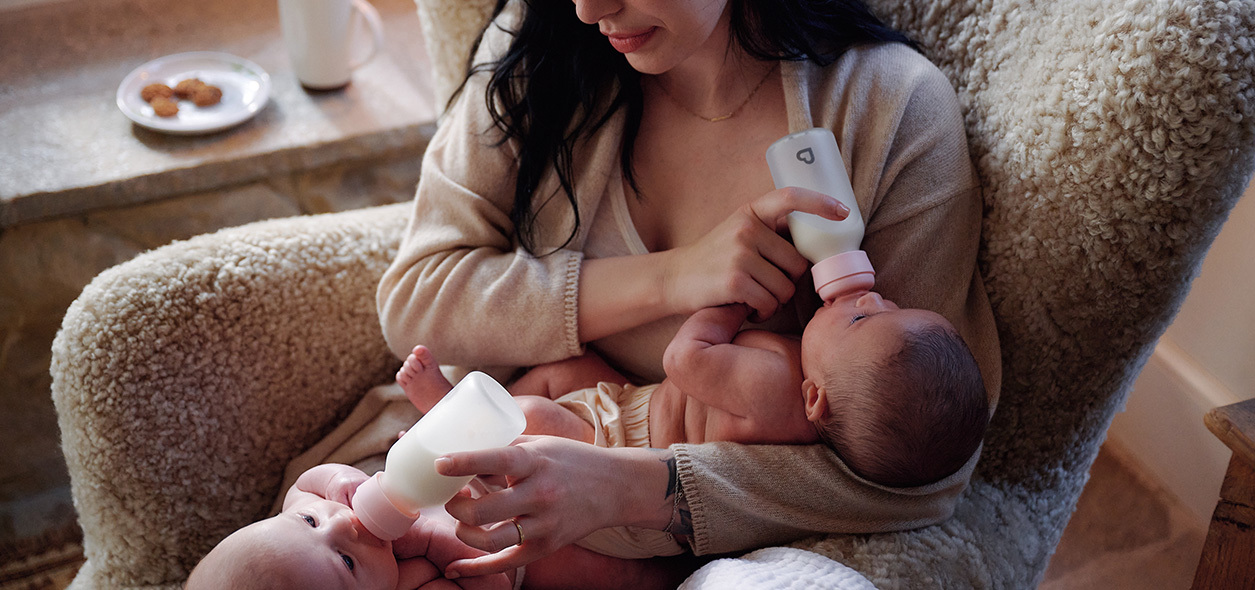
During the first few days, many formula-fed newborns drink about 1 to 2 fl oz every 2 to 3 hours. By around 6 months, many babies take 6 to 8 fl oz at four or five feedings per day.
These amounts are typical ranges, not targets. Use the formula feeding chart below as a starting point, then follow your baby’s hunger and fullness cues.
Formula Feeding Chart by Age
Babies generally drink more formula at each feeding as they grow, so the number of bottles they need each day often decreases. This chart provides a quick guide to how much formula babies commonly drink by age.
| Baby's Age | Estimated Daily Intake | 100% Formula | 50/50 Combo |
| 1-4 weeks | ~22 oz/day | Every 2 weeks 2 count | Every 4 weeks 2 count |
| 1-3 months | ~25-28 oz/day | Every 4 weeks 4 count | Every 4 weeks 2 count |
| 3-6 months | ~32 oz/day | Every 4 weeks 6 count | Every 6 weeks 4 count |
| 6-11 months | ~32 oz/day | Every 4 weeks 6 count | Every 6 weeks 4 count |
| 12 months | ~24 oz/day | Every 4 weeks 4 count | Every 6 weeks 4 count |
Please Note:
- Always follow your pediatricians recommendations for your baby's specific needs.
- These recommendations are estimates based on daily average intake by age and are not substitutes for pediatrician guidance.
- Combo feeding percentages shown assume 50% formula and 50% breastmilk; adjust proportions based on your feeding plan.
Can't find your exact fit? Have other questions?
Contact us at helpinfantformula@munchkin.com
Sources: CDC guidance for the first days of formula feeding and AAP guidance for feeding amounts during the first year. Intermediate ranges require confirmation during medical review.
Use the Chart as a Starting Point
Feed your baby, not the chart. Offer formula when your baby shows hunger cues, and stop when they show that they are full. Never pressure your baby to finish the last ounce.
Some babies drink smaller bottles more often, while others take more formula at fewer feedings. Babies born prematurely or with health or growth concerns may need an individualized feeding plan.
How Much Formula Does My Baby Need Per Day?
As a general estimate, the American Academy of Pediatrics states that babies may drink about 2.5 fl oz of formula per pound of body weight each day. The AAP advises that babies generally should not drink more than about 32 fl oz in 24 hours unless their pediatrician recommends otherwise.
For example, a 10-pound baby may drink about 25 fl oz per day. If that amount is divided across eight feedings, it averages slightly more than 3 fl oz per feeding.
This calculation is a reference point, not a daily requirement. Formula feeding amounts can vary between babies of the same age and weight. Your baby may also drink more during one feeding and less during another. As babies get older, they will drink more during daytime and less overnight.
Do not encourage your baby to reach the calculated amount after they show fullness cues. Speak with your pediatrician if your baby consistently drinks much more or less than expected or if you have concerns about growth or diaper output.
How Often Should You Feed a Formula-Fed Baby?
Formula-fed newborns commonly eat every 2 to 3 hours, or about 8 to 12 times in 24 hours. Feedings often become farther apart as babies grow and drink more at one time. A flexible formula feeding schedule may develop, but early hunger and fullness cues should guide each bottle.
What Are Common Hunger Cues?
Offer a bottle when your baby shows early signs of hunger, such as:
- Bringing their hands toward their mouth
- Turning their head and opening their mouth
- Sucking on their hands or fingers
- Smacking or licking their lips
- Becoming more alert or active
Crying is often a later hunger cue. Responding to earlier signs may help your baby begin feeding more calmly.
What Are Common Fullness Cues?
Your baby may have had enough when they:
- Slow or stop sucking
- Close their mouth
- Turn their head away
- Relax their hands
- Push the bottle away
- Lose interest in feeding
Pause or end the feeding when these signs appear. Do not encourage your baby to finish the remaining formula.
During a growth spurt, your baby may temporarily ask to eat sooner or drink more than usual. Offer more if hunger cues continue, but do not treat one larger feeding as a new fixed bottle amount.
How Does Formula Feeding Change When Solids Start?
Solid foods are usually introduced around 4-6 months when your baby shows signs of developmental readiness. They are added alongside formula rather than replacing bottles right away.
Breastmilk or infant formula remains the primary source of nutrition as solid foods are introduced and continues to provide important nutrition through 12 months. Formula intake may stay similar at first, then gradually decrease as your baby eats larger portions and a wider variety of solid foods.
Avoid removing bottles quickly to encourage more food. Feeding patterns vary during this stage, so focus on gradual progress rather than a fixed number of bottles.
Read How to Wean Your Baby Off Formula, for step-by-step guidance.
Around 12 months, ask your pediatrician about transitioning away from infant formula.
For broader guidance on feeding milestones, including the transition to solid foods, explore Munchkin’s Feeding Without Frustration (Or at Least… Less of It) conversation with pediatrician and lactation consultant Dr. Mona Amin.
How Can You Tell If Your Baby Is Getting the Right Amount?
Steady growth, regular wet diapers, active feeding, and periods of satisfaction after feeds provide a better picture of intake than the amount left in one bottle.
A bottle can make it easier to continue feeding after a baby is full. Pause during feeds, watch for changes in sucking and interest, and stop when your baby turns away or closes their mouth. Frequent spit-up alone does not confirm overfeeding, so speak with your pediatrician if you are concerned about intake or discomfort.
What Signs Suggest Your Baby Is Getting Enough?
Reassuring signs include:
- Steady growth over time
- Regular wet diapers
- Active and coordinated feeding
- Normal alertness
- Satisfaction after at least some feeds
Look at feeding, wet diapers, behavior, and growth over time rather than judging one unfinished bottle or one unusually hungry day.
When Should You Contact Your Pediatrician?
Speak with your pediatrician if your baby:
- Has fewer wet diapers than expected
- Is difficult to wake for feeds
- Regularly refuses bottles
- Has a marked or persistent drop in intake
- Shows poor or slowing weight gain
- Has signs of dehydration
- Has repeated or forceful vomiting
- Appears to be in ongoing pain or distress during feeds
Fewer wet diapers, unusual sleepiness, poor feeding, and reduced alertness can be signs that a baby needs prompt medical assessment. See CDC guidance on dehydration signs in infants and contact your pediatrician for advice.
For more guidance on wet diapers, growth, feeding behavior, and other intake signs, read How Do I Know My Baby Is Getting Enough to Eat?
“In infants, urine output is a good marker of hydration status. After the first few days of life, we want to consistently see at least 5 wet diapers per day to tell us that a baby is getting enough fluids. This as well as heart rate, energy level, and skin turgor tell us a lot about a baby’s hydration status”
-Ellen Campbell, MD
Frequently Asked Questions
Should I Wake My Newborn to Feed?
Some newborns need to be awakened if they sleep long enough to miss expected feedings. This may be especially important before a baby has regained their birth weight or if they were born prematurely, have jaundice, or have another health concern.
Ask your pediatrician when your baby can safely go longer between feeds. Their recommendation should reflect your baby’s age, growth, health, and feeding pattern. Commonly, as an infant ages, they may not need to be woken to feed.
When Should I Increase the Ounces in My Baby’s Bottle?
Consider offering a little more when your baby regularly finishes the bottle and continues showing clear hunger cues. Increase the amount gradually rather than making a large change after one hungrier feeding.
Stop when your baby shows fullness cues, even if some formula remains. Speak with your pediatrician if your baby regularly wants much more than the chart suggests or if you have concerns about growth, feeding frequency, or comfort.
Does a Formula-Fed Baby Need Extra Water?
Babies younger than about 6 months generally do not need extra water unless a pediatrician recommends it. Properly prepared formula provides the fluids they need. Never dilute formula because too much water can reduce the calories and nutrients your baby receives, and it can be dangerous to a baby’s health.
Around 6 months, you can begin offering small amounts of water in a cup as solid foods are introduced. Continue preparing formula exactly as directed on the label.
How Long Can a Prepared Bottle Sit Out?
The CDC recommends using prepared infant formula within two hours of preparation. Once feeding begins, use the formula within one hour and discard any amount left in the bottle.
If an unused bottle will not be offered within two hours, refrigerate it immediately and use it within 24 hours. Always follow the preparation and storage directions on the formula label.
This article is for general informational and educational purposes only and is not intended as medical advice. Feeding amounts vary from baby to baby, and the figures in this chart are typical averages, not targets. Feed your baby responsively, following their hunger and fullness cues, and consult your pediatrician about how much your baby should be eating, especially if your baby was born prematurely or has any health condition. Breastfeeding is recommended as the best source of nutrition for most infants.
References
- Centers for Disease Control and Prevention, How Much and How Often to Feed Infant Formula - https://www.cdc.gov/infant-toddler-nutrition/formula-feeding/how-much-and-how-often.html
- American Academy of Pediatrics, HealthyChildren.org, How Often and How Much Should Your Baby Eat? - https://www.healthychildren.org/English/ages-stages/baby/feeding-nutrition/Pages/how-often-and-how-much-should-your-baby-eat.aspx
- American Academy of Pediatrics, HealthyChildren.org, Amount and Schedule of Baby Formula Feedings - https://www.healthychildren.org/English/ages-stages/baby/formula-feeding/Pages/amount-and-schedule-of-formula-feedings.aspx
- American Academy of Pediatrics, HealthyChildren.org, Bottle-Feeding (Formula) Questions - https://www.healthychildren.org/English/tips-tools/symptom-checker/Pages/symptomviewer.aspx?symptom=Bottle-Feeding+(Formula)+Questions
- Centers for Disease Control and Prevention, Foods and Drinks for 6 to 24 Month Olds - https://www.cdc.gov/infant-toddler-nutrition/foods-and-drinks/index.html
- Centers for Disease Control and Prevention, Foods and Drinks to Encourage - https://www.cdc.gov/infant-toddler-nutrition/foods-and-drinks/foods-and-drinks-to-encourage.html
- Centers for Disease Control and Prevention, Manage Dengue in Infants - https://www.cdc.gov/dengue/treatment/dengue-infants.html

Dr. Elle Campbell
Pediatrician