How to Mix Formula Without Bubbles
8 min read
Published on 3 Sept 2026
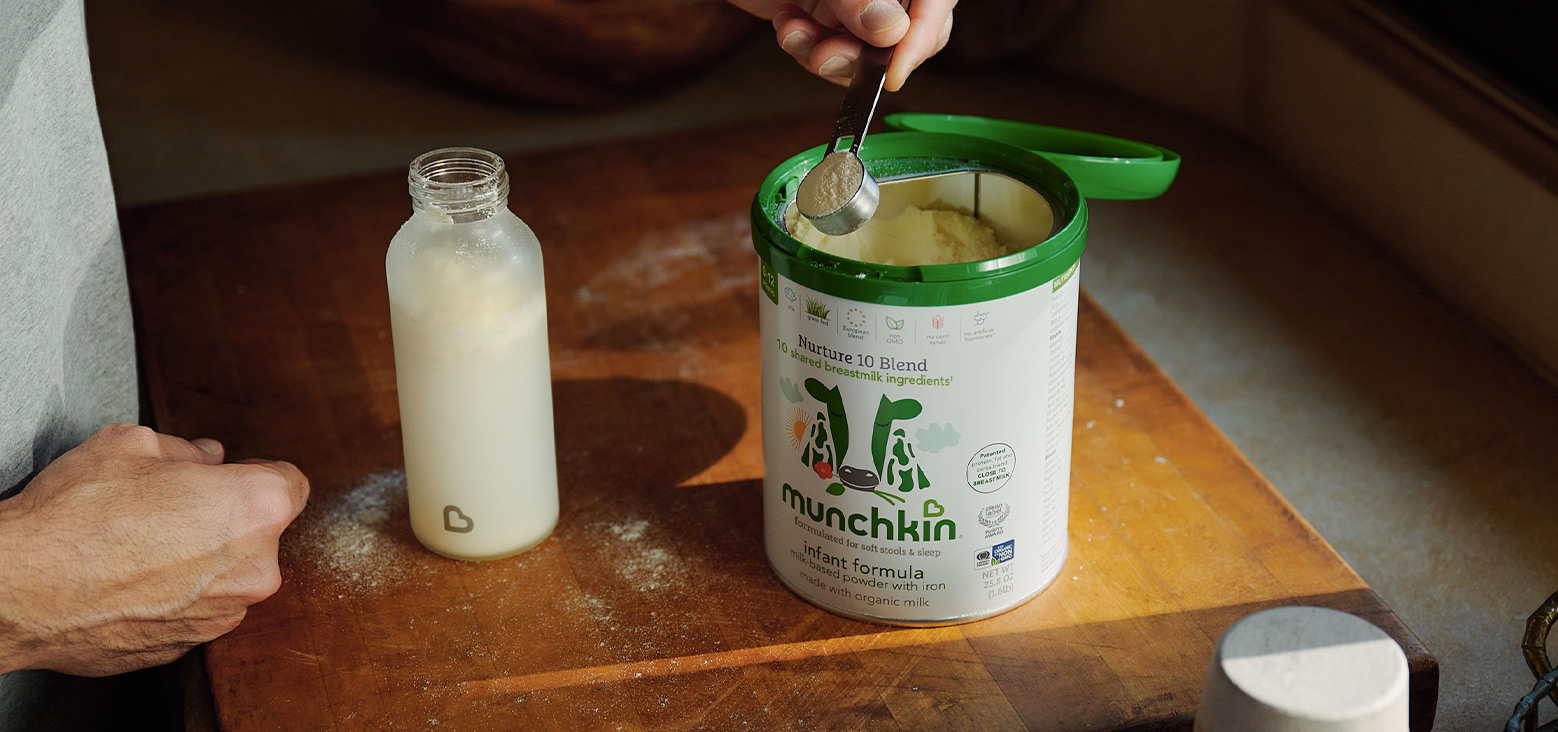
To mix formula with fewer bubbles, measure the water first, add the exact amount of powder, and mix the bottle exactly as the formula label directs until the powder is fully dissolved.
If foam remains, let it settle briefly when practical instead of trying to eliminate every bubble. A few bubbles are normal and generally harmless.
The bigger goal is reducing the air your baby swallows during feeding, since nipple flow, bottle position, feeding pace, and burping can all affect how much air enters during a bottle.
How Do You Mix Formula With Fewer Bubbles?
To reduce unnecessary foam, prepare formula in the correct order, mix only as directed, and stop once the powder is fully dissolved. The goal is fewer bubbles without changing the formula concentration or preparation method.
1. Measure the water first
Add the correct amount of safe water to the bottle before adding formula powder. The CDC recommends measuring the water first, then adding the powder.
Use the exact amount of water listed on the formula label. Babies younger than 2 months, babies born prematurely, and babies with weakened immune systems need additional precautions because powdered infant formula is not sterile.
The CDC advises using very hot water for these higher-risk infants and following its specific preparation steps. Ask your pediatrician if you are unsure which preparation method applies to your baby.
For the complete preparation process, see our how to make a baby bottle guide.
2. Add the exact amount of formula powder
Use the scoop supplied with the formula and measure the powder exactly as directed on the container.
Do not add extra powder or alter the scoop amount to change the texture or foam level. The correct concentration is more important than achieving a bubble-free bottle.
3. Mix only as the formula label directs
Check the container for the correct mixing method. Some powdered formulas instruct caregivers to shake the bottle until the powder is fully dissolved.
Munchkin Infant Formula, for example, directs caregivers to cap the bottle and shake until fully dissolved. Once the powder is fully dissolved, there is no need to keep shaking unnecessarily. Continued agitation can create more visible foam.
4. Let the foam settle briefly when practical
If bubbles remain after mixing, allow the bottle to rest briefly when practical. Some foam may dissipate on its own.
There is no need to wait until every bubble disappears. Follow the formula label's storage and discard guidance rather than leaving prepared formula out longer just to reduce foam.
5. Use a mixing pitcher carefully if preparing formula ahead
A formula mixing pitcher can be useful for families who prepare several feeds in advance because it reduces repeated bottle-by-bottle mixing.
The Munchkin Smart Blend™ Formula Mixing Pitcher is designed to reduce air bubbles compared with shaking formula in an individual bottle and can mix and store up to 24 oz.
If you prepare formula ahead, use clean equipment and safe water, follow the correct ratio, and refrigerate it immediately if it will not be used within 2 hours. CDC recommends using refrigerated prepared formula within 24 hours. Once feeding begins, discard any formula left in the bottle after 1 hour.
How Can You Reduce the Air Your Baby Swallows During Feeding?
How much air a baby swallows can also be influenced by how they drink, not only by the bubbles in the bottle. Nipple flow, bottle angle, feeding position, and pauses during feeding can all affect how much air enters.
Choose a nipple flow that matches your baby's feeding needs
Choose a nipple flow that allows your baby to suck, swallow, and breathe comfortably. If your baby regularly gulps, coughs, pulls away, or seems uncomfortable during feeds, pause and reassess the feeding pace. Ask your pediatrician or feeding professional if these difficulties continue.
Watch your baby's feeding cues instead of changing nipple flow based on age alone.
Keep the nipple filled with milk
Hold the bottle at an angle that keeps milk covering the nipple during the feed. The American Academy of Pediatrics recommends this positioning to help reduce the amount of air a baby swallows.
If the nipple repeatedly fills with air, adjust the bottle angle before continuing.
Feed in a supported, semi-upright position
Hold your baby with their head and neck supported and their upper body slightly upright. Avoid feeding flat on the back.
This position makes it easier to watch for changes in sucking, breathing, and comfort while feeding.
Pause if your baby starts gulping or becoming unsettled
If your baby begins gulping, coughing, pulling away, or fussing, pause the feeding rather than encouraging them to continue.
A short break can help slow the feeding before you offer the bottle again.
Burp your baby when helpful
Some babies benefit from burping during or after a feeding. If your baby appears comfortable, you do not need to keep trying to produce a burp. Feeding responses vary from one baby to another.
Consider an anti-colic or vented bottle
Vented bottles are designed to manage airflow as your baby drinks and may help reduce excess swallowed air for some babies. They do not guarantee less gas, spit-up, fussiness, or colic.
Munchkin offers vented bottle and nipple options designed to support comfortable bottle feeding. You can explore the Munchkin baby bottles and feeding collection to compare available designs and flow options.
For more expert-led feeding guidance, Munchkin’s Feeding Without Frustration conversation with pediatrician and IBCLC Dr. Mona Amin covers common feeding challenges from infancy onward.
Do Bubbles in Formula Cause Gas or Colic?
A few bubbles in properly prepared formula are generally not harmful, and bubbles alone should not be treated as the cause of colic. Babies can swallow air during bottle feeding, which may contribute to temporary fussiness, burping, or spit-up.
Colic is more complex. The American Academy of Pediatrics notes that its cause is not clear and there is no single specific treatment. Reducing excess swallowed air may make some feedings more comfortable, but a foam-free bottle does not guarantee less gas or colic.
For broader context on formula feeding and common feeding concerns, read Formula Feeding: The Data, The Science, and The Real-Life Decisions.
What Should You Avoid When Trying to Reduce Formula Bubbles?
Reducing foam should never come at the expense of safe formula preparation.
- Do not change the water-to-powder ratio: Extra water or powder changes the concentration of the prepared formula.
- Do not substitute a mixing method that conflicts with the formula label: Follow the directions on the specific product you are using.
- Do not leave prepared formula at room temperature longer just to let bubbles disappear: Follow the preparation, storage, and discard instructions on the label.
A few remaining bubbles are preferable to changing a preparation step for the sake of a foam-free bottle.
When Should You Talk to Your Pediatrician About Gas or Fussiness?
Speak with your pediatrician if your baby seems persistently uncomfortable or has repeated vomiting, poor feeding, weight loss or poor weight gain, signs of dehydration, excessive sleepiness, or another concerning change.
Gas alone does not establish a food allergy or another feeding-related condition, and bubbles in the bottle do not confirm either. If symptoms continue, discuss them with your pediatrician before changing the formula.
See signs your baby may be sensitive to formula for more guidance.
Frequently Asked Questions
Why is my formula still foamy after mixing?
Some foam can remain even when the formula is prepared correctly. Mixing introduces air into the liquid, and some formulas may appear foamier than others because their ingredients and composition differ. If the formula was prepared according to the label and the powder is fully dissolved, visible foam alone is generally not a reason to remix the bottle.
Is formula foam the same as swallowed air?
No. Formula foam refers to visible air bubbles in the bottle, while swallowed air is the air your baby takes in during feeding. Bottle angle, nipple flow, gulping, and feeding position can affect how much air a baby swallows.
Do bubbles mean I need to remake the bottle?
Not necessarily. If the formula was prepared with the correct water-to-powder ratio and according to the label directions, visible bubbles alone do not mean the bottle needs to be remade. Prepare a new bottle if the ratio or preparation steps were incorrect.
Can formula bubbles mean I mixed the bottle incorrectly?
Not always. Some bubbles can form even when the formula is mixed exactly as directed. What matters most is using the correct amount of water and powder and following the mixing instructions on the container. A foamy appearance by itself does not show that the formula was prepared incorrectly.
This article is for general informational and educational purposes only and is not intended as medical advice. A few bubbles in formula are generally harmless. Always prepare formula using the exact water-to-formula ratio on the label, and never change the amount of water to reduce foam. Gas and fussiness are common in babies and have many causes; if your baby seems persistently uncomfortable, speak with your pediatrician. Breastfeeding is recommended as the best source of nutrition for most infants.
References
- Centers for Disease Control and Prevention, Infant Formula Preparation and Storage - https://www.cdc.gov/infant-toddler-nutrition/formula-feeding/preparation-and-storage.html
- HealthyChildren.org, American Academy of Pediatrics, Bottle Feeding Basics - https://www.healthychildren.org/English/ages-stages/baby/feeding-nutrition/Pages/Bottle-Feeding-How-Its-Done.aspx
- HealthyChildren.org, American Academy of Pediatrics, Baby Burping, Hiccups & Spit-Up - https://www.healthychildren.org/English/ages-stages/baby/feeding-nutrition/Pages/baby-burping-hiccups-and-spit-up.aspx
- HealthyChildren.org, American Academy of Pediatrics, Abdominal Pain in Infants: 8 Possible Reasons Your Baby’s Tummy Hurts - https://www.healthychildren.org/English/health-issues/conditions/abdominal/Pages/Abdominal-Pains-in-Infants.aspx
Munchkin