Straw Cup vs Sippy Cup: Which Is Better for Your Child?
12 min read
Published on 1 Oct 2026
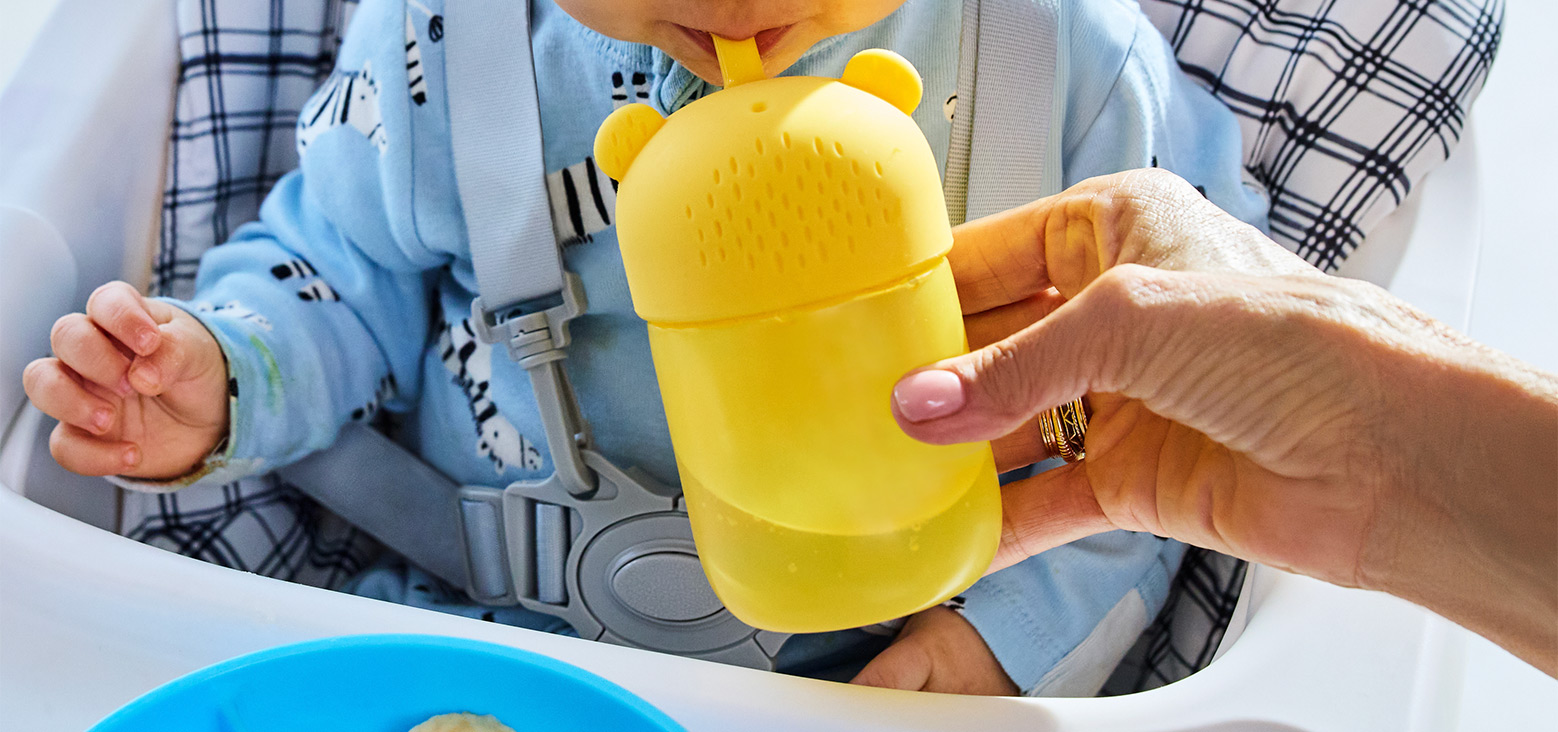
For most children, a straw cup or open cup is the stronger choice for regular cup practice, while a traditional sippy cup can help when spill control matters. Straw and open cups expose children to different drinking actions and give them more opportunities to practice managing liquid without a projecting spout.
That does not mean sippy cups are harmful. Current evidence does not show that occasional sippy-cup use causes speech or oral-development problems.
Feeding professionals may recommend offering different cup types to give children varied drinking experiences.
This guide explains the straw cup vs sippy cup difference and shows how 360° and open cups compare for spill control, cup practice, and everyday use.
What is the difference between a straw cup and a sippy cup?
The main difference is how your child gets liquid from the cup. A traditional sippy cup has a projecting spout that releases liquid when the cup is tipped or sucked. Some children may find the spout familiar after bottle-feeding.
A straw cup requires your child to draw liquid through a straw. An open cup requires them to drink directly from the rim and control the cup’s angle.
A 360° or spoutless cup uses a valved rim instead of a projecting spout. Your child drinks around the edge, while the valve automatically seals after drinking to help prevent spills. The valve changes how the liquid is released, so a 360° cup does not work exactly like an open cup.
Are straw cups better than sippy cups for development?
Straw and open cups are generally the stronger options for regular cup-drinking practice. They expose children to different ways of managing liquid than a traditional projecting spout and provide more opportunities to practice drinking from a straw or rim.
However, these differences do not prove that straw cups improve speech development or that sippy cups harm it. The American Speech-Language-Hearing Association notes that there is no scientific evidence directly connecting sippy-cup use with oral or facial development problems.
Traditional sippy cups can still have a practical role. Feeding professionals may encourage families to offer different cup types rather than relying on one design for every drink.
Parents comparing a sippy cup versus a straw cup often have questions about speech. Cup choice is only one part of a child’s feeding experience, and many factors influence speech development.
Do sippy cups cause speech delays?
There is not enough evidence to say that sippy cups directly cause speech delays. Using one cup type exclusively may give a child fewer opportunities to practice other drinking actions, but that does not mean the cup causes a speech disorder.
Using a sippy cup occasionally does not mean your child will develop a delay. Speak with your pediatrician or a speech-language pathologist if you have concerns about your child’s feeding, swallowing, or speech development.
How do straw, sippy, 360, and open cups compare?
Each cup type offers a different balance of skill practice, spill control, and ease of use. The best choice depends on your child’s abilities and where the cup will be used.
The CDC says parents can offer a spouted training cup or a cup with a straw at around 6 months, when solid foods begin.
The table below shows how the four main cup types compare.
|
Cup type |
How your child drinks |
What it lets your child practice |
Spill resistance |
Flow rate |
Learning curve |
When it may be useful |
| Straw cup | Draws liquid upward through a straw | Drawing liquid through a straw and managing each sip | Moderate to high | Low to High | May require guided practice | From around 6 months when developmentally ready, for meals and outings |
| Traditional sippy cup | Drinks through a projecting spout | Tipping or sucking through a covered spout | Usually high | Moderate to High | May feel familiar after bottle-feeding | Occasional use when spill control matters |
| 360° or spoutless cup | Drinks around a valved rim | Drinking from a rim and controlling the cup angle | High | Low to High | Moderate | When rim drinking and added spill resistance are useful |
| Open cup | Drinks directly from an uncovered rim | Tipping, pacing, and managing an unrestricted flow | Low | High | Usually requires close support | Supervised practice around 6 months or later, based on readiness |
No single cup needs to meet every need. Your child might use an open cup at meals, a straw cup during outings, and a spill-resistant cup when mess control matters.
Munchkin offers open training cups, straw cups, and Miracle® 360° cups for different settings. Explore the Munchkin cups-for-every-stage collection to compare straw, Miracle® 360°, open, training, and traditional spouted sippy cups.
What is the best first cup for a baby?
There is no single best first cup for every baby. Around 6 months, you can begin offering an age-appropriate straw, training, or open cup with appropriate adult support.
Your baby does not need to master a traditional sippy cup before trying a straw or open cup. The Centers for Disease Control and Prevention says parents can offer a spouted training cup or a cup with a straw at around 6 months, when solid foods begin.
Use the cup type that fits the purpose:
- For supervised practice: Offer a small open cup and help your baby control the angle.
- For regular use: Try a straw cup your baby can manage comfortably.
- For spill control: Consider a valved straw, 360°, or covered training cup.
- If your baby resists: Pause and try another design later.
Keep early cup practice short and supervised. Spills and rejected attempts are common while babies learn. Pause if your baby appears uncomfortable.
Contact your pediatrician or a feeding and swallowing specialist if your baby regularly coughs or chokes while drinking, develops a wet-sounding voice or persistent congestion during or after feeds, or appears to have difficulty swallowing.
Munchkin’s updated cups-for-every-milestone range includes straw, spoutless, traditional spout, and controlled-flow open-cup options for different drinking needs.
How can you use a sippy cup without relying on it all day?
A sippy cup can be useful when spill control matters. Treat it as one cup option rather than the only way your child drinks.
A few habits can help:
- Offer straw or open-cup practice at meals.
- Use the sippy cup when stronger spill resistance is helpful.
- Serve milk with meals instead of leaving it available throughout the day.
- Offer water between meals when appropriate.
- Avoid offering milk, juice, or other sugar-containing drinks for continuous sipping at bedtime.
- Clean lids, valves, and spouts according to the product instructions.
Cup shape is not the only dental concern. Dental risk depends more on what your child drinks, how frequently they sip, and how long their teeth remain exposed.
The American Academy of Pediatric Dentistry identifies repeated use of sippy or no-spill cups with sugar-containing drinks, along with frequent between-meal sugar exposure, as factors that increase cavity risk.
Avoid making milk, formula, juice, or sweetened drinks continuously available for sipping throughout the day.
Which cup is the better choice for your child?
For regular cup practice, a straw cup is a strong everyday option, while an open cup works well for supervised meals. A 360° cup provides greater spill resistance, and a traditional sippy cup can still be useful when convenience matters.
Your child does not need to use only one cup type. Choose options they can manage safely, and that fit the setting in which they will be used.
Frequently asked questions
Why does my baby cough when drinking from a straw cup?
Your baby may cough if the straw releases liquid faster than they can manage or if they draw in a larger sip than expected. Pause the drink and give your baby time to recover before offering the cup again.
Check that your baby is seated upright and that the cup is assembled correctly. Speak with your pediatrician or a feeding specialist if coughing happens regularly or occurs with choking, a wet-sounding voice, persistent congestion during or after drinking, or difficulty swallowing.
Why will my baby not drink from a straw cup?
Your baby may not yet understand how to draw liquid through the straw. Some spill-resistant valves require more suction, which can make a cup harder for some babies to use while learning.
Check that the straw is connected correctly and free from blockages. You can try a softer straw or a design with lower resistance while your baby learns. Stop if your baby becomes upset, and try again at another meal.
For assisted straw drinking, try a squeezable straw cup which allows the caregiver to squeeze the cup to allow water to flow through the straw to baby, supporting early straw drinking skills.
Are weighted straw cups better than regular straw cups?
A weighted straw is designed to follow the liquid as the cup tilts. This may allow a child to drink from more than one cup angle.
A regular straw cup usually needs to stay more upright. Neither design is better for every child. Consider your child’s posture, drinking skills, and ability to manage the liquid flow.
Is a valved or free-flow straw cup easier to learn?
A free-flow straw does not have the same spill-resistant valve used in many covered straw cups, so it may require less suction. However, the faster flow can be harder for some babies to manage.
A valved straw provides stronger spill resistance but may require more effort. The easier option depends on whether your child needs help creating suction or controlling the amount of liquid released.
For babies first learning to drink from a straw, a faster high flow valve or valveless straw may support early straw drinking skills. Once they have learned initial skills, this flow rate may be too high and they can be switched to a valved straw for a more moderate flow rate.
This article is for general informational and educational purposes only and is not intended as medical advice. Children develop at their own pace, and cup preferences vary. If you have concerns about your child's feeding, speech, or dental health, consult your pediatrician, a speech-language pathologist, or your child's dentist.
References
- American Speech-Language-Hearing Association, The ASHA Leader, Skip the Sippy? Coaching Parents on Sippy Cup Use - https://leader.pubs.asha.org/do/10.1044/2024-1023-sippy-cups-slps/full/
- Centers for Disease Control and Prevention, Fingers, Spoons, Forks, and Cups - https://www.cdc.gov/infant-toddler-nutrition/mealtime/fingers-spoons-forks-and-cups.html
- American Academy of Pediatric Dentistry, Policy on Early Childhood Caries (ECC): Consequences and Preventive Strategies - https://www.aapd.org/research/oral-health-policies--recommendations/early-childhood-caries-classifications-consequences-and-preventive-strategies/
Munchkin