Is There Corn Syrup in Baby Formula? What the Label Actually Means
9 min read
Published on 16 Nov 2026
Yes, some baby formulas contain corn syrup solids, while many standard cow’s milk formulas use lactose as their main carbohydrate. Corn syrup solids are different from the high-fructose corn syrup found in some soft drinks, despite the similar names.
If you have spotted the ingredient on a label, the useful next step is to understand why it is there and check which carbohydrates the formula contains.
What Do Formula Carbohydrate Labels Mean?
Similar names on a formula label can describe different carbohydrates. The American Academy of Pediatrics lists lactose, corn syrup solids, sucrose, modified starch, and maltodextrins among ingredients used in infant formula. It distinguishes corn syrup solids from high-fructose corn syrup.
These are the carbohydrate names you may see on a formula label, plus the ingredient often confused with corn syrup solids. What do the carbohydrate terms on a formula label mean?
|
Label term |
What it means |
| Lactose | A sugar naturally present in milk made up of glucose and galactose. It is also the primary carbohydrate in breastmilk. |
| Corn syrup | A liquid, corn-derived syrup containing glucose and glucose chains. |
| Corn syrup solids | Made by removing the water from corn syrup. |
| Glucose syrup solids | Dried carbohydrates made from starch (corn, wheat, potato, etc). The name alone does not tell you which starch was used. |
| Maltodextrin | Carbohydrate made from starch (corn, wheat, potato, rice, etc). Composed of glucose chains. |
| Sucrose | Table sugar, made up of glucose and fructose. |
| High-fructose corn syrup | A different corn-derived ingredient containing glucose and fructose. Do not mistake it for corn syrup solids. |
Why Do Some Formulas Use Corn Syrup Solids?
Some formulas use corn syrup solids when they contain less lactose or no lactose. The formula still needs a carbohydrate source to provide energy. According to the American Academy of Pediatrics, carbohydrates provide about 35% to 40% of the calories in infant formula.
A manufacturer may use corn syrup solids to provide some of that carbohydrate when lactose is reduced. Other formulas use different sources or a combination of sources. Soy formulas, for example, do not contain lactose, but that does not mean every soy formula contains corn syrup solids. The AAP’s formula guide identifies glucose or sucrose as carbohydrate sources in soy formula.
The term “sensitive” does not identify a particular carbohydrate source. Check the ingredients list of the product you are considering rather than assuming that all formulas with a similar name have the same composition.
Are Corn Syrup Solids in Formula Safe?
Corn syrup solids are used as a carbohydrate source in some infant formulas. The American Academy of Pediatrics includes corn syrup solids among common formula carbohydrates and distinguishes them from high-fructose corn syrup, which can be found in some processed foods and beverages.
The FDA requires ingredients used in infant formula to be approved food additives or generally recognized as safe and suitable for that use. Infant formulas legally marketed in the United States must also meet applicable nutrient, manufacturing, and quality requirements. Those requirements apply to the complete formula. They do not establish that one carbohydrate source is right for every baby.
You can prefer a lactose-based formula without treating another regulated formula ingredient as a warning sign. If your baby has persistent symptoms or a medical condition, a pediatrician can help assess the complete formula and your baby’s needs.
“Commercially available infant formulas have a wide array of carbohydrate compositions. Lactose is the primary carbohydrate in human milk and while some infant formulas are lactose-based, more than half of all formulas sold in the United States use non-lactose carbohydrates. There is some evidence that glucose-based formula may lead to different metabolic responses in infants than lactose-based formula, which is important to consider. However, there are certain medical conditions and digestive sensitivities that require lactose-free or hypoallergenic formulas, which rely on non-lactose carbohydrates. I know there are so many options to choose from when it comes to infant formula, and your pediatrician is there to help guide you!”
-Dr. Alexis Berkovits, MD
How Can You Check a Formula Label?
The ingredients list tells you which carbohydrate sources a formula contains. Here is a way to approach the label on your child’s formula:
- Find the ingredients list: Check the can or the product’s current ingredient page instead of relying on a term such as “sensitive” on the front.
- Identify the carbohydrate sources: Look for the names explained in the table above.
- Check for more than one: A formula may contain lactose alongside another carbohydrate. Finding lactose does not establish that it is the only source.
- Check the formula type: Note whether the product is a standard or specialty infant formula, particularly if a clinician recommended your baby’s current formula.
Ingredients generally appear in descending order by weight, but their position alone cannot tell you the exact amount of each carbohydrate in a prepared bottle. Use the list to identify what is present, then consider the complete formula rather than one ingredient in isolation.
Which Formulas Use Lactose?
If you prefer a lactose-based formula, check the current ingredients list rather than relying on a front-of-package claim. The American Academy of Pediatrics identifies lactose as the main carbohydrate in cow’s milk formula, although individual formulations vary.
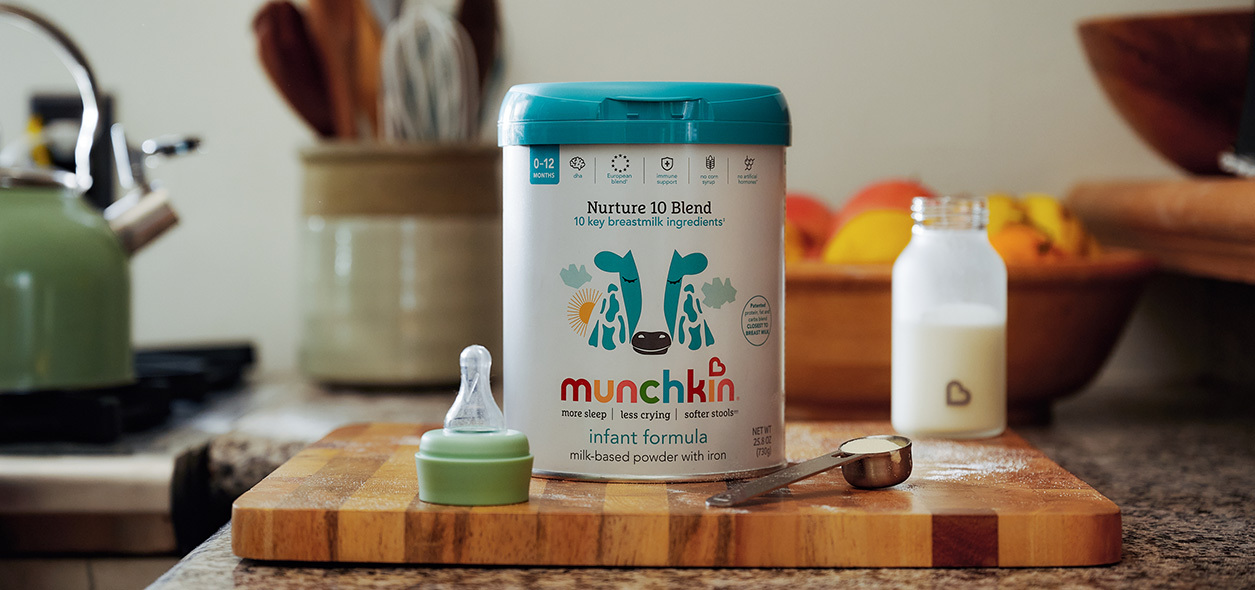
If you are looking for baby formula without corn syrup solids, both Munchkin® Infant Formula Made with Original Milk and Made with Organic Milk list lactose among their ingredients. Neither current ingredient list names corn syrup solids. The Organic Milk variant lists organic lactose; the Original Milk variant lists lactose. Check the label on the can you purchase for the most current formulation.
When Should You Ask Your Pediatrician?
Ask your pediatrician before choosing a lactose-free or specialty formula for persistent feeding symptoms, a suspected allergy, or another medical concern. Gas or fussiness alone cannot identify an ingredient as the cause.
The American Academy of Pediatrics advises checking with a pediatrician before starting a lactose-free formula because symptoms may have another cause.
For more on symptoms that warrant a call, see when to contact your pediatrician about formula-feeding symptoms.
Frequently Asked Questions
Do corn syrup solids in formula cause gas or fussiness?
An ingredient list alone cannot identify the cause of a baby’s gas or fussiness. The American Academy of Pediatrics notes that switching formulas for these symptoms is rarely helpful. Ask your pediatrician about persistent or concerning symptoms.
Is lactose-free formula suitable for a baby with a cow’s milk protein allergy?
Removing lactose does not necessarily remove all cow’s milk proteins. If you suspect an allergy, ask your pediatrician which formula is appropriate. The American Academy of Pediatrics recommends discussing formula options with your baby’s clinician before switching.
What should you check before changing to a lactose-based formula?
Check whether your baby’s current formula was recommended for a medical reason before changing it. Compare the new product’s ingredients and follow its preparation instructions exactly. Mixing directions can differ between formulas, as the AAP notes. If your pediatrician agrees that a change is appropriate, how to switch baby formula safely covers practical transition considerations.
This article is for general informational and educational purposes only and is not intended as medical advice. Breastfeeding is recommended as the best source of nutrition for most infants. Always consult your pediatrician about your baby’s feeding, formula choice, and any health concerns, especially if your baby was born prematurely, has allergies, or any underlying health condition.
References
- American Academy of Pediatrics, Is Baby Formula Safe? Does It Contain Anything That Could Be Harmful? -https://www.healthychildren.org/English/tips-tools/ask-the-pediatrician/Pages/is-baby-formula-safe.aspx
- American Academy of Pediatrics, Choosing a Baby Formula - https://www.healthychildren.org/English/ages-stages/baby/formula-feeding/Pages/Choosing-an-Infant-Formula.aspx
- U.S. Food and Drug Administration, Infant Formula Homepage - https://www.fda.gov/food/resources-you-food/infant-formula-homepage
- U.S. Food and Drug Administration, Types of Food Ingredients - https://www.fda.gov/food/food-additives-and-gras-ingredients-information-consumers/types-food-ingredients
- American Academy of Pediatrics, Bottle-Feeding (Formula) Questions - https://www.healthychildren.org/English/tips-tools/Symptom-Checker/Pages/symptomviewer.aspx?symptom=Bottle-Feeding+%28Formula%29+Questions
- American Academy of Pediatrics, Cow’s Milk Alternatives: Parent FAQs - https://www.healthychildren.org/English/healthy-living/nutrition/Pages/Milk-Allergy-Foods-and-Ingredients-to-Avoid.aspx
- American Academy of Pediatrics, What Should I Know About Recalled Baby Formula? - https://www.healthychildren.org/English/tips-tools/ask-the-pediatrician/Pages/What-should-I-know-about-the-infant-formula-recall.aspx

Dr. Alexis Berkovits
Pediatrician