Powder Formula vs Ready-to-Feed: Which Should You Use?
10 min read
Published on 8 Oct 2026

Powder formula is generally the more economical choice for everyday feeding, while ready-to-feed formula requires no mixing and is made to be sterile. Both forms sold in the United States must meet applicable FDA nutritional quality and safety standards, although their ingredients can vary by product.
Ready-to-feed may be especially useful when a pediatrician recommends a sterile liquid for a higher-risk baby. It can also be practical during travel, emergencies, and other situations where safe preparation is difficult.
The right choice depends on your baby’s health needs, your budget, and how you plan to prepare and store each feed.
What Is the Difference Between Powder and Ready-to-Feed Formula?
The main difference is preparation. Powdered formula must be combined with water according to the product label. Ready-to-feed formula comes premixed and should be served without adding water. The FDA identifies three formula formats: powder, liquid concentrate, and ready-to-feed. Liquid concentrate also requires water, so it is different from ready-to-feed formula.
|
Factor |
Powder formula |
Ready-to-feed formula |
| Preparation | Measure and mix with safe water | Serve as directed or pour into a clean bottle |
| Added water | Required | Never add water |
| Sterility | Not sterile | Commercially sterile |
| Cost | Generally the least expensive format | Generally the most expensive format |
| Portability | Lighter, but requires safe water and supplies | Heavier, but needs no mixing |
| After opening | Store the powder in a cool, dry place | Refrigerate unused liquid as directed |
| Waste | Prepare only the amount needed | Unused liquid may expire sooner |
| Practical fit | Routine feeding when safe preparation is practical | May be preferred for higher-risk babies, with pediatric guidance, and situations where mixing is difficult |
Is Ready-to-Feed Formula Safer Than Powder?
Ready-to-feed formula has a sterility advantage because it is commercially sterile. Powdered formula is not sterile and can sometimes contain germs, including Cronobacter. Non-sterile does not mean that powdered formula is inappropriate for most babies. The CDC states that most babies can safely receive powdered formula when caregivers follow the product label and recommended preparation practices.
Cronobacter infections are rare, but they can be serious in infants. Powdered formula can contain Cronobacter, and germs can also enter formula from hands, preparation surfaces, scoops, bottles, or other feeding equipment. Careful preparation and storage help reduce contamination risk.
Which babies need extra precautions?
The CDC recommends extra precautions for babies who:
- Are younger than 2 months
- Were born prematurely
- Have a weakened immune system
The FDA identifies ready-to-feed formula as the safest formula option for higher-risk infants who are not receiving breastmilk. Liquid concentrate is also made to be sterile, but it still requires water.
If powdered formula is used for a higher-risk baby, ask your pediatrician which preparation method is appropriate. The CDC’s extra-precaution method calls for boiling water, waiting about five minutes, and then mixing it with the exact amount of powder stated on the label. The CDC explains that the water should remain very hot, about 158°F or 70°C, to help kill germs such as Cronobacter that may be present in the powder. Cool the prepared bottle to a safe feeding temperature before offering it.
Hot-water preparation does not replace careful handling. Wash your hands, keep the scoop clean and dry, use properly cleaned feeding equipment, and follow the product’s storage instructions.
Follow the formula label and Munchkin’s guide on how to make a baby bottle for complete preparation instructions.
Is Powder or Ready-to-Feed Formula Cheaper?
Powder is generally the least expensive infant formula format, while ready-to-feed is the most expensive. The FDA confirms this cost order, with liquid concentrate typically priced between the two.
Compare the cost per prepared fl oz rather than the container price. A powder container may appear expensive but produce many more servings after mixing. Ready-to-feed pricing includes the convenience of a premixed product. Actual costs vary by formula, package size, retailer, location, and promotion, so a single price estimate cannot represent every option.
Include potential waste when comparing ready-to-feed formula cost. Smaller containers may reduce leftovers, but they can carry a higher cost per fl oz.
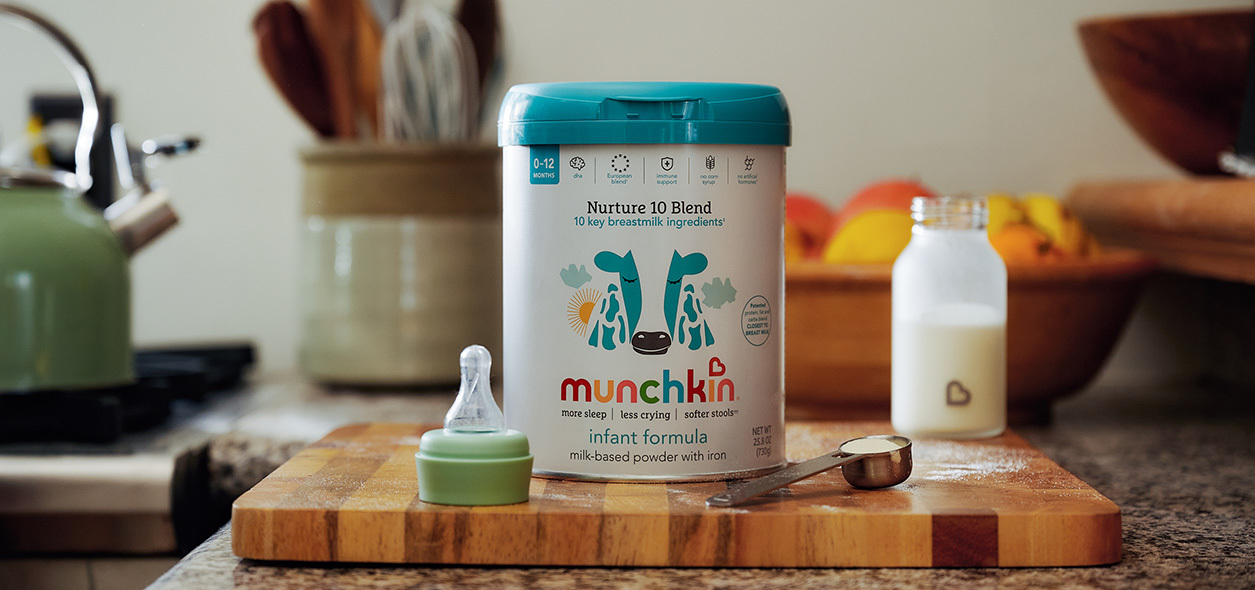
For families considering a powder option, Munchkin® Infant Formula is a milk-based powder with iron for babies from birth through 12 months. Both Munchkin® variants contain the Nurture 10 Blend with 10 ingredients shared with breastmilk.*
*Structure and levels differ from those in breastmilk.
Which Formula Form Is More Convenient?
Ready-to-feed formula requires fewer preparation steps because it needs no water measurement, mixing, or added water. Powder takes more preparation, but it is lighter, more compact, and easier to portion for regular use. Convenience depends on where you are feeding and which supplies are available.
At home
At home, powder may suit a regular feeding routine when safe water and a clean preparation area are available. Ready-to-feed removes the mixing step but requires more storage space.
While traveling
Powder is compact for travel, but preparing it away from home still requires safe water, clean feeding equipment, and careful measuring. If the product label permits powder to be portioned for travel, keep it dry and separate from water until preparation. Follow the label exactly for measuring, sanitation, safe water, storage, and discard instructions.
Ready-to-feed removes the need to locate safe water or measure powder. This can make feeding simpler during flights, road trips, or short outings. Its containers are heavier, and unused formula may need refrigeration after opening.
During an emergency
Ready-to-feed can be particularly useful when the water supply is unsafe because it does not require water. The CDC advises using ready-to-feed formula during emergencies when possible.
Boiling can kill many germs in water, but it cannot remove harmful chemicals or toxins. Follow local public-health instructions if a water advisory, flood, or other emergency affects your area.
How Do Storage Times Differ?
Most opened powdered formulas should be used within one month, while opened ready-to-feed formula must be refrigerated and used within the period stated on its label.
Opened powdered formula
Keep opened powder tightly covered in a cool, dry place. Do not refrigerate it. According to the CDC, most powdered formulas should be used within one month of opening. Confirm the exact period on the label, write the opening date on the lid, and never use formula after its “use by” date.
Opened ready-to-feed formula
Cover and refrigerate unused ready-to-feed formula promptly after opening. Use it within the period printed on the product label because storage limits can vary.
Prepared formula and bottles used for feeding
The CDC provides these preparation and feeding windows:
- Use prepared formula within two hours of preparation.
- Once feeding begins, use the bottle within one hour.
- If feeding will not begin within two hours, refrigerate the prepared bottle immediately and use it within 24 hours.
- Discard any formula left in the bottle after feeding.
For ready-to-feed formula poured from an opened container, follow the product label’s refrigeration and use instructions. The one-hour discard rule still applies once your baby begins drinking from the bottle.
A baby’s saliva can introduce bacteria into the bottle, so unfinished formula should never return to the refrigerator. To reduce waste, prepare only an amount allowed by the label’s measuring instructions. Never change the water-to-powder ratio or estimate partial scoops.
See our complete guide to formula storage and discard times.
How Can You Choose Between Powder and Ready-to-Feed?
Choose the form that fits your baby’s health needs and that you can prepare, store, and serve correctly. Powder may suit routine feeding when cost and storage space are priorities. Ready-to-feed may suit situations where mixing is difficult or a sterile liquid is recommended.
You can also use an appropriate powder for regular feeds and keep ready-to-feed formula for travel, emergencies, or other situations where safe preparation is less practical. Check both labels before alternating because products with similar names may have different ingredients or intended uses.
Ask your pediatrician which form is appropriate if your baby is younger than 2 months, was born prematurely, has a weakened immune system, uses a specialty formula, or has ongoing feeding concerns.
Frequently Asked Questions
Can you add powder to ready-to-feed formula?
No. Adding powder makes ready-to-feed formula more concentrated than intended. Follow the product label exactly. Only change a formula’s concentration when a qualified healthcare professional provides specific preparation instructions for your baby.
Do you add water to ready-to-feed formula?
No. Ready-to-feed formula is already prepared at its intended concentration. Adding water reduces the calories and nutrients your baby receives and can create an unsafe fluid-to-nutrient balance. The FDA advises caregivers not to add water to ready-to-feed formula.
Does ready-to-feed formula need to be warmed?
No. The CDC states that infant formula does not need to be warmed. If you choose to warm it, place the bottle under running warm water or use a bottle warmer according to its instructions. Keep water out of the bottle and nipple. Never microwave formula because uneven heating can create hot spots that burn a baby’s mouth or throat.
This article is for general informational and educational purposes only and is not intended as medical advice. Powder and ready-to-feed formulas sold in the US both meet FDA standards and provide complete nutrition. Powdered formula is not sterile and must be prepared safely; if your baby was born prematurely, is under 2 months old, or has a weakened immune system, ask your pediatrician which form is best. Breastfeeding is recommended as the best source of nutrition for most infants.
References
- U.S. Food and Drug Administration, Handling Infant Formula Safely: What You Need to Know - https://www.fda.gov/food/buy-store-serve-safe-food/handling-infant-formula-safely-what-you-need-know
- Centers for Disease Control and Prevention, Infant Formula Preparation and Storage - https://www.cdc.gov/infant-toddler-nutrition/formula-feeding/preparation-and-storage.html
- U.S. Food and Drug Administration, Information for Health Care Professionals on Safe Handling of Infant Formula - https://www.fda.gov/food/buy-store-serve-safe-food/information-health-care-professionals-safe-handling-infant-formula
- Centers for Disease Control and Prevention, Special Considerations for Emergencies - https://www.cdc.gov/infant-feeding-emergencies-toolkit/php/special-considerations.html
Munchkin