What Water Should You Use for Baby Formula? A Safe Preparation Guide
12 min read
Published on 21 Jul 2026
For most healthy, full-term babies, you can use clean tap water that is safe to drink to prepare formula, filtered or unfiltered. Bottled, distilled, and purified water all work too. The one exception is for babies who are under 2 months old, were born prematurely, or have a weakened immune system: for them, boil the water first and let it cool before mixing.
Water is not just a neutral ingredient in a bottle. It makes up most of what your baby drinks, so its safety matters every bit as much as the formula itself. The good news is that for most families, the water you already have at home is perfectly fine, and once you know the few situations that call for extra care, the whole thing gets simple.
Here is what this covers: whether tap water is safe, when you need to boil water and how to do it, which types of water to use, how fluoride fits in, and how to get the water-to-formula ratio right.
Can you use tap water for baby formula?
Yes, you can use tap water for baby formula in most cases, as long as your local tap water is safe to drink. Filtered or unfiltered, both are fine. For most families on a public water supply, plain tap water mixed according to the formula label is a safe, convenient, and inexpensive choice.
The key phrase is "safe to drink." If your community's tap water meets safety standards, it is generally fine for formula. You can check your local water quality through your utility's annual Consumer Confidence Report, which most providers post online, or by contacting your local water authority. If your home runs on a private well, do not assume the water is safe. Well water should be tested for bacteria, nitrates, and other contaminants before you use it for formula, since private wells are not regulated the way public systems are.
One thing worth knowing, especially in older homes: use cold tap water, not hot, to prepare formula. Hot water is more likely to pull lead out of older pipes and fixtures. If the tap has been sitting unused for several hours, let the cold water run for a minute or two before you fill the bottle, which clears out any water that has been standing in the pipes. If your home was built before 1986, or you have any reason to suspect lead in your plumbing, consider having your water tested, and use bottled or certified lead-filtered water for formula if lead turns up.
Do you need to boil water for baby formula?
Not always. For most healthy, full-term babies with safe tap water, you do not need to boil the water before mixing formula. But you should boil the water and let it cool for babies who are at higher risk of infection, because powdered formula is not sterile, and very hot water is what kills any bacteria in it, such as Cronobacter. Clean, sanitized bottles matter here too.
You should boil water to prepare formula if your baby:
- Is younger than 2 months old
- Was born prematurely, before 37 weeks
- Has a weakened immune system
For these babies, here is how to do it safely:
- Boil clean water, then let it cool for about 5 minutes.
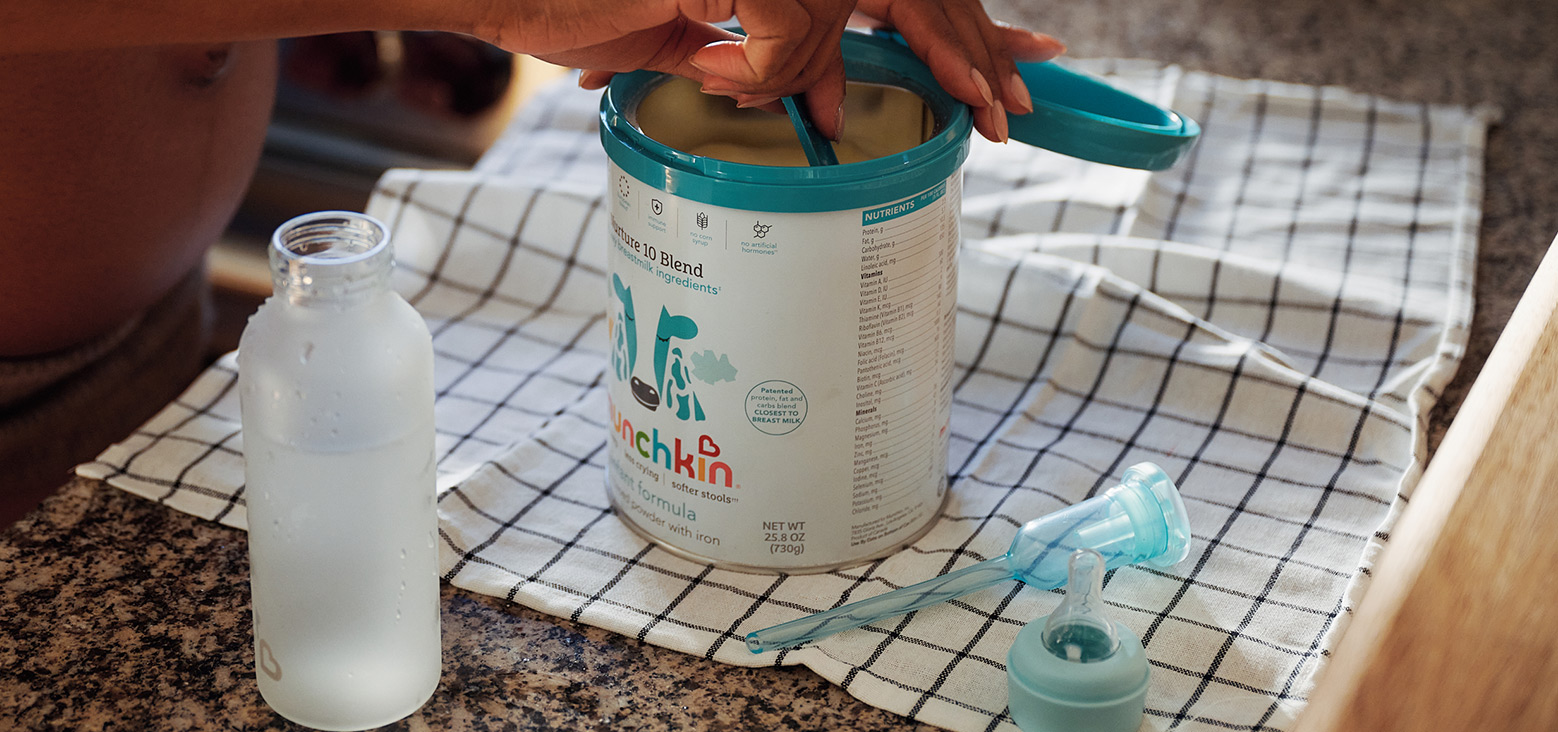
- Pour the amount of water you need into a clean bottle, add the exact amount of formula per the label, and mix.
- Cool the prepared bottle quickly under running water or in a bowl of cold water until it is lukewarm, not hot.
- Test a few drops on your wrist before feeding. It should feel warm, not hot.
There is one important thing boiling does not do. It kills germs, but it does not remove lead, nitrates, fluoride, or other chemicals, and it can actually concentrate them as some of the water evaporates. So if your worry is chemical contamination rather than bacteria, say lead from old plumbing or nitrates in well water, boiling will not help. In those cases, switch to bottled water or water filtered by a system certified to remove that specific contaminant instead.
What types of water are safe for baby formula?
Most types of clean water are safe for preparing formula, with a few worth using carefully. Here is how the common options compare.
|
Water type |
Safe to use? |
Good to know |
| Tap (safe to drink) | Yes | Filtered or unfiltered; use cold water and run the tap first in older homes |
| Filtered | Yes | Convenient and can improve taste; does not replace boiling for at-risk babies |
| Bottled | Yes | Not automatically safer than tap; check the fluoride level |
| Distilled | Yes | Has no minerals, which is fine since formula supplies them; naturally low in fluoride |
| Purified (reverse osmosis or deionized) | Yes | Similar to distilled; may retain some trace minerals |
| Spring | Occasionally | Naturally higher in minerals, so it is fine now and then but not ideal for daily use |
| Well | Only if tested | Test for bacteria, nitrates, and contaminants first, since wells are unregulated |
| Nursery water | Yes, with care | Often has added fluoride, so factor it into your baby's total fluoride |
A few of these come up a lot. Distilled and purified water are both popular for formula because they are very clean and low in fluoride. Distilled water has had its minerals removed, which sometimes worries parents, but it is not a problem: infant formula is nutritionally complete and supplies all the minerals your baby needs, so the water does not have to.
Spring water is not recommended for everyday use, because its naturally higher mineral content is more than a young baby's kidneys need to process, though the occasional bottle is fine.
Nursery water is simply purified water sold for babies, often with fluoride added. It is fine to use, just count it toward your baby's overall fluoride intake, which we will get to next.
Is fluoride in water a concern for babies?
For most babies, no. Fluoride is safe and helps prevent tooth decay, and dental experts say it is fine to keep using fluoridated tap water to mix formula. The one thing to be aware of is that regularly using water with a high fluoride level to mix formula during the first several months can slightly raise the risk of mild dental fluorosis. Fluorosis is a cosmetic change, faint white streaks or spots on the teeth, and it is not harmful to your baby's health.
This is mainly worth a thought if your baby is exclusively formula fed, since in that case formula makes up nearly all of what they drink. If you are especially keen to minimize the small risk, you can use a low-fluoride water such as distilled or purified, or ready-to-feed formula, for some or all of your bottles. There is no need to cut out fluoride, and no need to worry if you have been using fluoridated tap water, because the risk is small and only cosmetic.
If you are not sure about the fluoride level in your area, your local water authority can tell you, and your pediatrician or dentist can help you decide whether any change is worth making.
Getting the water-to-formula ratio right
Always follow the exact water-to-formula measurements printed on your formula's label. The ratio matters more than a lot of parents realize:
- Too much water dilutes the nutrients and can be genuinely dangerous, since it throws off the balance of sodium and fluids in a baby's body.
- Too little water makes the formula too concentrated and can strain a baby's kidneys and digestion.
Measure carefully every time, and never add extra water to stretch a can further.
Different formats also mix differently, so check the label for the one you use:
- Powdered formula is mixed with water in the ratio the label specifies.
- Concentrated liquid is diluted with an equal amount of water.
- Ready-to-feed formula needs no water at all. It comes premixed and ready to pour, which makes it a handy option when you are traveling, when clean water is hard to come by, or during a water advisory.
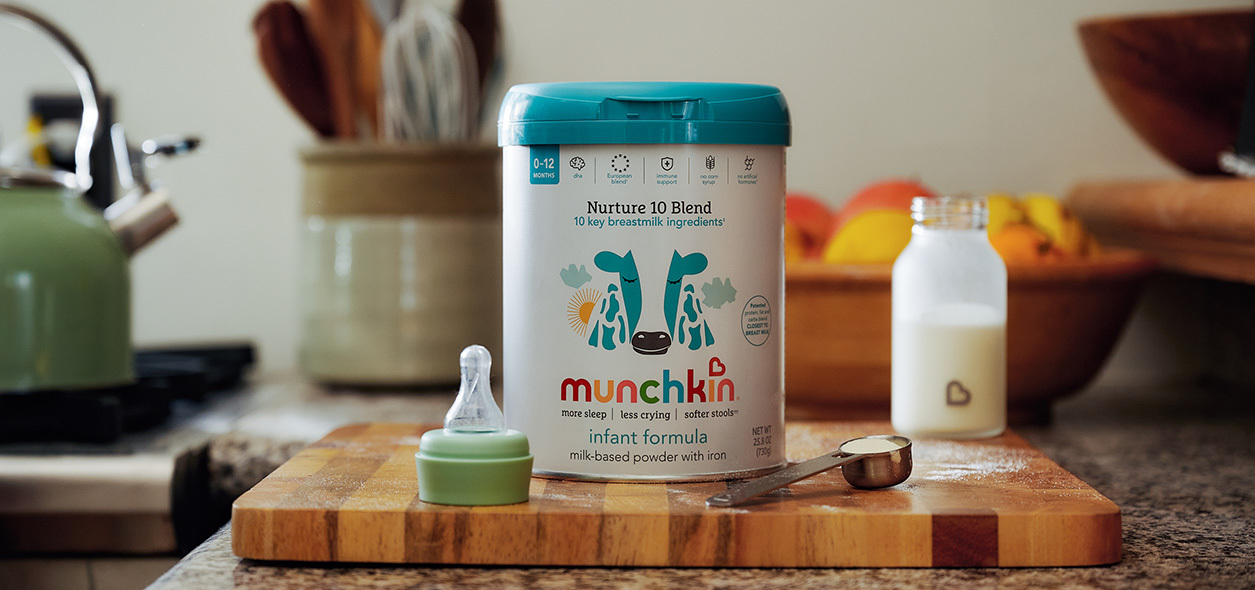
Whatever formula you use, the mixing instructions on that specific product are the ones to follow, since they are set for that formula's exact composition. If you use Munchkin Infant Formula, follow the mixing instructions on the can, which are set for its exact composition. For more on preparing bottles, see our formula prep questions guide.
The bottom line
For most families, the water you already have at home works fine. If your tap water is safe to drink, you can use it, filtered or unfiltered, to mix your baby's formula. Take extra care if your baby is under 2 months old, was born prematurely, or has a weakened immune system, boiling the water and letting it cool first, and remember that boiling handles germs but not chemicals like lead. When in doubt about your water, check with your local water authority or your pediatrician.
Frequently asked questions
Can you use bottled water for baby formula without boiling it?
For most healthy, full-term babies, yes, as long as it is clean drinking water. But bottled water is not automatically sterile, so if your baby is under 2 months old, was born prematurely, or has a weakened immune system, you should still boil bottled water and let it cool before mixing, just as you would with tap water.
How long is boiled water good for once it has cooled?
The safest approach is to boil the water, let it cool for about 5 minutes, and mix the formula right away rather than storing boiled water for later. Use boiled water within 30 minutes of boiling or throw it out. Once mixed, use the prepared bottle within 2 hours, or within 1 hour once your baby starts feeding. If you are not using it right away, refrigerate it and use it within 24 hours.
Can you use cold water to mix formula?
Yes. Formula does not need to be warmed, and many babies happily take a room-temperature or cool bottle. If your baby prefers it warm, heat the prepared bottle by standing it in warm water, and never use a microwave, which creates hot spots that can burn your baby's mouth.
What water should you use during a water advisory or emergency?
If your local authority issues a boil-water or do-not-drink advisory, use bottled water or ready-to-feed formula until they confirm the tap is safe again. This is especially important because some contamination, such as chemicals or toxins, cannot be fixed by boiling.
This article is for general informational and educational purposes only and is not intended as medical advice. Always follow the preparation instructions on your formula's label and any guidance from your local water authority regarding water safety. Consult your pediatrician or a qualified healthcare professional about the right way to prepare formula for your baby, especially if your baby was born prematurely, is younger than two months, has a weakened immune system, or if you use well water or have concerns about your water quality.
References
- Centers for Disease Control and Prevention, Infant Formula Preparation and Storage — https://www.cdc.gov/infant-toddler-nutrition/formula-feeding/preparation-and-storage.html
- Centers for Disease Control and Prevention, Preventing Cronobacter Infection in Infants — https://www.cdc.gov/cronobacter/prevention/index.html
- Centers for Disease Control and Prevention, Fluoride and Infant Formula — https://www.cdc.gov/fluoridation/faqs/infant-formula.html
- Centers for Disease Control and Prevention, Lead in Drinking Water — https://www.cdc.gov/lead-prevention/prevention/water.html
- U.S. Food and Drug Administration, Infant Formula Information for Parents and Caregivers — https://www.fda.gov/food/infant-formula-homepage/infant-formula-information-parents-caregivers
- American Academy of Pediatrics, HealthyChildren.org, Formula Feeding — https://www.healthychildren.org/English/ages-stages/baby/formula-feeding
Munchkin