Enfamil® vs Munchkin Formula: What Should Parents Compare?
13 min read
Published on 8 Sept 2026
There is no single best choice between Enfamil® and Munchkin for every baby. Infant formulas sold in the United States must meet applicable FDA requirements for safety and nutritional adequacy.
Beyond that shared baseline, individual products can differ in formulation, certifications, format, availability, and cost. Since Enfamil® offers several formula lines, the most useful Enfamil® and Munchkin comparison focuses on the exact products you are considering.
This guide explains what to compare so you can make a decision based on your baby’s needs, your priorities, and your budget.
What should you compare when choosing between infant formulas?
Compare the exact products rather than relying on brand names alone. Formula lines can differ in carbohydrate source, protein composition, added ingredients, certifications, format, and price.
Reading each product label helps you focus on the features that matter for your baby and your feeding routine.
| Criterion | Why it matters | What to look for |
| Main carbohydrate source | Infant formulas may use lactose, corn syrup solids, maltodextrin, or other permitted carbohydrate sources, depending on the product and its intended use. | Identify the main carbohydrate ingredients on the exact product label. Do not assume that every formula from one brand uses the same source, and do not treat a permitted carbohydrate as inherently unsafe or inferior. |
| Protein source and form | Formulas may use intact, partially hydrolyzed, extensively hydrolyzed, or amino-acid-based proteins for different feeding needs. Whey and casein proportions can also vary. | Check the milk and protein source, degree of hydrolysis, and whether the product is intended for routine feeding or use under medical guidance. |
| Milk and fat base | Standard cow's-milk-based formulas can contain different blends of milk ingredients, vegetable oils, and structured fats. | Read the full ingredient list without treating one permitted ingredient as automatically better or worse. |
| DHA, ARA, and other nutrients | Formulas may include ingredients in addition to the nutrients required under US regulations. | Check which ingredients are included, their stated purpose, and whether product claims are supported by appropriate evidence. |
| Organic status and certifications | Organic and third-party certifications can reflect sourcing, production, or testing standards. They do not determine whether a formula is nutritionally adequate. | Confirm that each certification applies to the specific formula variant you are considering. |
| Formula form | Infant formula may be available as powder, liquid concentrate, or ready-to-feed liquid. Each format has different preparation, storage, and cost considerations. | Consider how you feed at home, during travel, overnight, or while using childcare. |
| Ongoing value | The price of one container does not show the full monthly cost. Package size, preparation yield, and feeding volume also affect value. | Compare the cost per prepared fl oz, not only the price shown on the shelf. Include delivery fees, promotions, and subscription terms where relevant. |
| Availability | A formula needs to be consistently accessible if it becomes part of your baby's regular feeding routine. | Check local stock, online availability, shipping reliability, and access while traveling. |
These criteria provide a more useful comparison than judging formulas by one ingredient, certification, or price point. The importance of each feature depends on your baby’s feeding needs, your family’s preferences, and what you can purchase consistently.
Do routine Enfamil® and Munchkin formulas follow the same FDA requirements?
Yes. Routine infant formulas marketed in the United States must meet applicable FDA requirements for safety, nutritional adequacy, manufacturing, and labeling. These federal requirements apply to routine infant formulas sold in the US, including routine products offered by Enfamil® and Munchkin.
The FDA establishes required nutrient levels for standard infant formulas. Manufacturers must also register their facilities and submit information about a new or substantially changed formula before introducing it to the market. This is a premarket notification process, not an FDA approval or endorsement of an individual formula brand.
These requirements establish an important regulatory and nutritional baseline. They do not make every formula identical. Products can still differ in their ingredients, sourcing, certifications, preparation formats, price, and availability.
Specialized formulas for premature infants or certain medical conditions may follow different requirements. They should be used or replaced only with guidance from a qualified healthcare professional.
Why should you compare a specific Enfamil® product instead of the brand as a whole?
Enfamil® is a long-established mainstream infant nutrition brand with a broad range of products. Its published range includes formulas for routine feeding as well as gentle, hypoallergenic, premature-infant, and other specialized feeding needs.
Ingredients and features vary across these product lines. Depending on the specific formula, differences may include the carbohydrate source, protein form, added nutrients, and powder or ready-to-use format. Some Enfamil® lines also include ingredients such as DHA and MFGM.
Enfamil® products are sold through many major retailers. However, broad brand availability does not mean that every product line is stocked in every store or format. Use the comparison framework above to review the exact Enfamil® product’s intended use, ingredient list, preparation format, certifications, package yield, price, and availability.
Premature-infant, hypoallergenic, amino-acid-based, extensively hydrolyzed, and other medically indicated formulas should not be replaced based only on a general brand comparison. Ask your pediatrician before changing a formula recommended for a specific medical or nutritional need.
What does Munchkin Infant Formula offer?
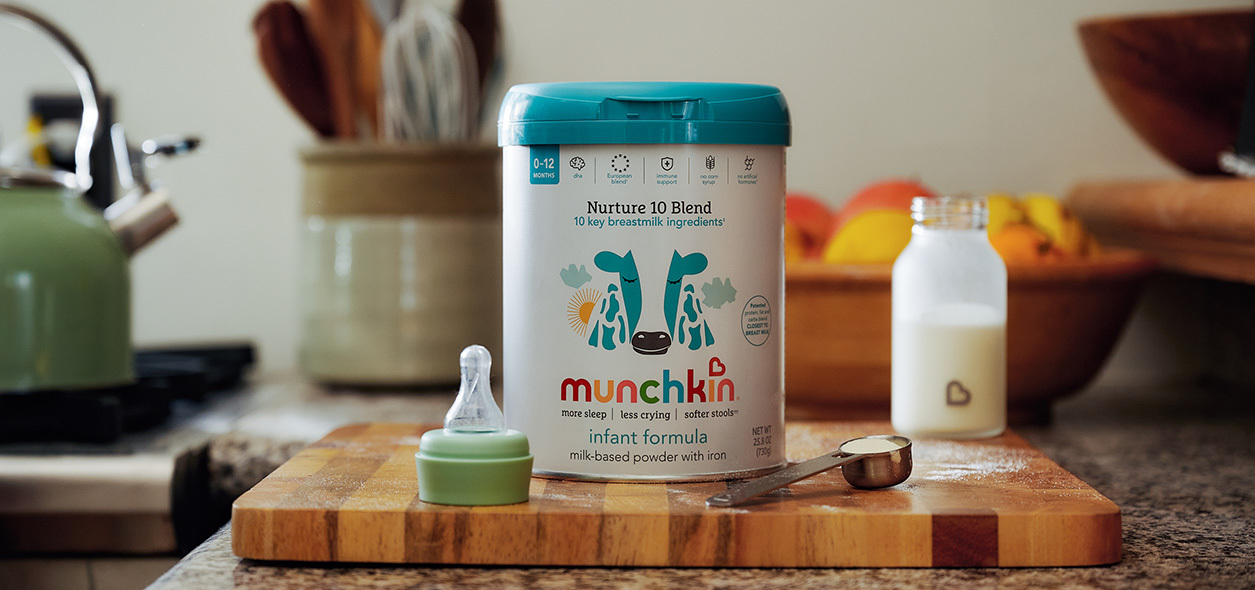
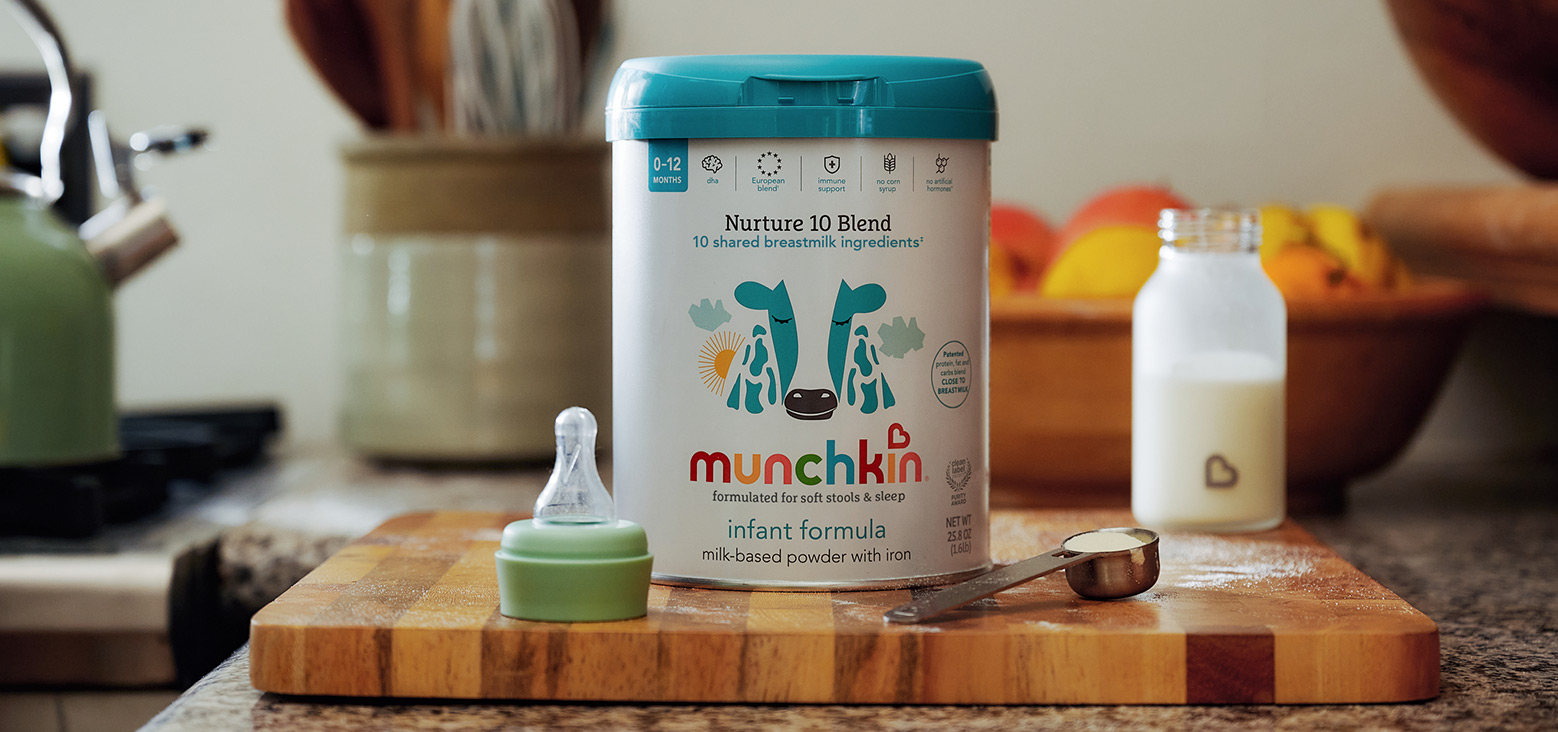
Munchkin Infant Formula is an iron-fortified, cow’s-milk-based powder for infants from birth through 12 months. Lactose is its main carbohydrate, and both the Original and Organic variants contain the Nurture 10 Blend. These product details can help parents assess whether Munchkin matches the criteria they prioritize.
What are its carbohydrate, protein, and fat sources?
Munchkin Infant Formula is cow’s-milk-based and uses lactose as its main carbohydrate. It contains proteins, fats, carbohydrates, vitamins, and minerals formulated to meet applicable US infant nutrition requirements.
Munchkin Infant Formula is cow’s-milk-based and uses lactose as its main carbohydrate. Its formulation includes DHA, ARA, and beta-palmitate, among other nutrients. DHA and ARA support brain and eye development, while beta-palmitate is included as part of the formula’s structured fat blend.
These features should be considered as part of the complete formulation. One ingredient alone does not determine how well a formula will suit an individual baby.
What is included in the Nurture 10 Blend?
The Nurture 10 Blend includes 10 nutrients also found in breastmilk*:
- Alpha-lactalbumin
- Lactoferrin
- Beta-palmitate
- Lutein
- DHA
- ARA
- Nucleotides
- Taurine
- L-carnitine
- Beta-carotene
These nutrients perform different functions within the formulation. DHA and ARA help support brain and visual development. Lutein helps support developing vision, while nucleotides help support cell growth and natural immunity.
*Structure and levels differ from those in breastmilk.
What clinical evidence supports Munchkin Infant Formula?
Munchkin Infant Formula was evaluated in a 16-week randomized, controlled, double-blind clinical trial involving 260 infants. The study assessed growth, formula acceptance, stool characteristics, gas, fussiness, and gastrointestinal side effects.
The study reported equivalent weight gain and healthy head growth compared with the control formula. It also reported significantly less gas and fussiness, soft stools, and fewer moderate gastrointestinal side effects in the Munchkin group. The control formula in this study should not be assumed to represent Enfamil® or any other formula discussed in this article.
These findings describe results from the study population and do not guarantee the same experience for every baby.
How do the Original and Organic variants differ?
Both variants contain the Nurture 10 Blend. The main differences involve the milk source and certification profile.
Munchkin Infant Formula Made with Original Milk contains nonfat milk and demineralized whey. Munchkin Infant Formula Made with Organic Milk uses USDA-certified organic milk from grass-fed New Zealand cows. The non-GMO claim applies only to the Organic variant.
Both variants are sold in 25.8 oz powder cans. Review the exact product label because sourcing and certification claims may apply to one variant rather than the full Munchkin formula range.
How is Munchkin Infant Formula made and tested?
Munchkin Infant Formula is manufactured in a purpose-built infant nutrition facility in Canada. According to Munchkin’s approved quality materials, the facility is audited by the FDA and the Canadian Food Inspection Agency.
The manufacturing program includes current good manufacturing practices, preventive controls, and batch testing for contaminants and pathogens. Munchkin states that testing includes heavy metals, Cronobacter, and Clostridium botulinum. Both variants carry applicable Clean Label Project certifications, including the Purity Award.
These statements describe Munchkin’s own manufacturing and testing practices. They are not a comparison with another formula’s quality or safety controls.
Where is Munchkin Infant Formula available?
Munchkin Infant Formula is available through Target and Munchkin.com, depending on location and current availability. Munchkin.com may also offer subscription savings or other purchase promotions. Check the current offer terms before comparing ongoing costs.
When assessing value, compare the cost per prepared fl oz rather than the price of one can. Package yield, shipping costs, subscription terms, purchase frequency, and consistent availability all affect the ongoing cost.
For a broader discussion of formula ingredients and real-world feeding decisions, listen to Munchkin’s StrollerCoaster feature, Formula Feeding: The Data, the Science, and the Real-Life Decisions
How can you decide which formula fits your baby and routine?
If you are deciding between Enfamil® and Munchkin formula, first confirm that the exact products are intended for the same age and feeding need. Then separate your baby’s nutritional or medical needs from your family’s preferences.
A focused decision process can help:
- Confirm the formula type: Make sure both products are routine formulas or serve the same feeding purpose. Ask your pediatrician before replacing a premature-infant, hypoallergenic, extensively hydrolyzed, amino-acid-based, or other medically indicated formula.
- Identify your priorities: Consider which features matter to your family, such as lactose as the main carbohydrate, organic certification, formula format, third-party certifications, or a particular ingredient profile.
- Assess practical fit: Consider preparation requirements, recurring cost, storage, local and online availability, and how the product fits your daily routine.
- Observe feeding and growth: Pay attention to feeding comfort, wet diapers, stool patterns, intake, and growth. Some temporary changes may occur after a formula switch, but severe or persistent symptoms require medical guidance.
Contact your pediatrician if you have concerns about your baby’s feeding, hydration, persistent symptoms, or growth. Do not continue a new formula only to complete a set adjustment period if concerning symptoms appear.
The most suitable choice depends on the exact products, your baby’s needs, and the practical factors your family prioritizes.
For more support, see How to Choose a Baby Formula, and How to Switch Baby Formula Safely.
Frequently Asked Questions
Can you switch from Enfamil® to Munchkin Infant Formula?
Many babies using a routine cow’s-milk-based formula can switch between brands when both products are intended for the same age and feeding need. Follow the new formula’s label instructions exactly. Ask your pediatrician before replacing a premature-infant, hypoallergenic, extensively hydrolyzed, amino-acid-based, or other medically indicated formula.
Can you use an Enfamil® scoop with Munchkin formula?
No. Use only the scoop provided with the exact formula you are preparing. Scoop sizes and preparation ratios can differ between products. Using the wrong scoop can make a bottle too concentrated or too diluted.
Can a baby’s stool change after switching formula brands?
A baby’s stool color, consistency, or frequency may change after switching formulas because ingredient and nutrient blends vary. Contact your pediatrician if the change is accompanied by blood in the stool, repeated vomiting, poor feeding, dehydration, severe discomfort, or concerns about growth.
When should you call a pediatrician after changing formula?
Contact your pediatrician if your baby has persistent feeding difficulty, repeated vomiting, blood in the stool, breathing problems, fewer wet diapers, unusual sleepiness, severe discomfort, or poor growth. Seek urgent medical care for breathing difficulty, swelling, or another possible severe allergic reaction.
This article is for general informational and educational purposes only and is not intended as medical advice. All infant formulas sold in the United States, including Enfamil® and Munchkin, must meet the applicable FDA standards for safety and nutrition. The right formula depends on your individual baby, and this article does not claim any one formula is superior. Always consult your pediatrician about choosing or changing your baby's formula, especially if your baby was born prematurely or has any health condition. Breastfeeding is recommended as the best source of nutrition for most infants. The structure and levels of nutrients shared with breastmilk differ from those in breastmilk.
Enfamil® is a registered trademark of Mead Johnson & Company, LLC. Munchkin is not affiliated with, endorsed by, or sponsored by Mead Johnson & Company LLC or Enfamil®. References to Enfamil® in this article are made solely for identification and comparative purposes and do not imply endorsement or affiliation with Mead Johnson & Company, LLC.
References
- U.S. Food and Drug Administration, Infant Formula Homepage - https://www.fda.gov/food/resources-you-food/infant-formula-homepage
- HealthyChildren.org, American Academy of Pediatrics, Choosing a Baby Formula - https://www.healthychildren.org/English/ages-stages/baby/formula-feeding/Pages/choosing-an-infant-formula.aspx
- U.S. Food and Drug Administration, Handling Infant Formula Safely: What You Need to Know - https://www.fda.gov/food/buy-store-serve-safe-food/handling-infant-formula-safely-what-you-need-know
- Enfamil®, Created by Real Families, Backed by Real Science - https://www.enfamil.com/why-enfamil/
- Enfamil®, Preemie Formulas for Premature Infant Nutrition - https://www.enfamil.com/products/preemie-formulas/
- Enfamil®, Hypoallergenic Baby Formula - https://www.enfamil.com/products/hypoallergenic-baby-formula/
- PLOS ONE, New Infant Formulas for Healthy Term Infants: A Randomized, Controlled, Double-Blind, Multicenter, Non-Inferiority Design Safety Study - https://journals.plos.org/plosone/article?id=10.1371/journal.pone.0336689
Munchkin