How to Travel With Baby Formula: A Practical Guide
14 min read
Published on 23 Sept 2026
The best way to travel with baby formula is to pack enough for the journey and possible delays, keep powdered formula separate from safe water, and carry clean feeding supplies. Unopened ready-to-feed formula can reduce preparation steps during difficult travel periods.
Under current TSA formula rules, formula, breastmilk, and water for babies may be carried in reasonable quantities greater than the standard 3.4 oz or 100 mL liquid limit. These items must be presented for screening.
Can You Bring Baby Formula on a Plane?
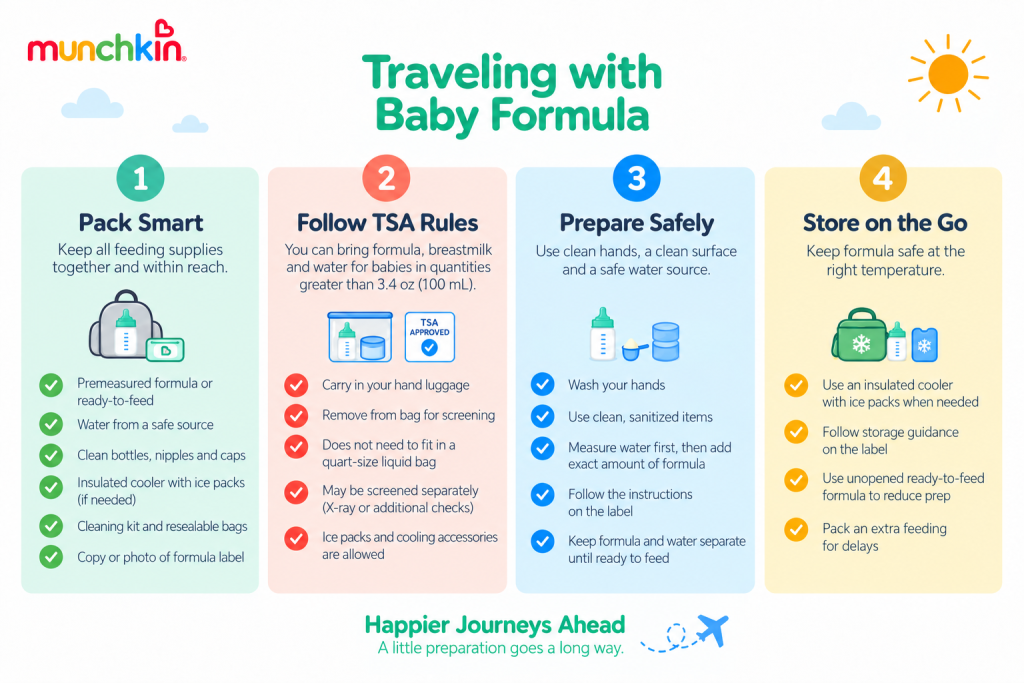
Yes. Current TSA formula rules allow formula, breastmilk, toddler drinks, and water for babies in quantities greater than 3.4 oz or 100 mL in carry-on baggage. You may bring a reasonable quantity for your trip, and these items do not need to fit inside a quart-size liquids bag.
Tell the TSA officer about these items at the start of screening. Remove them from your carry-on so officers can inspect them separately. Powdered formula, prepared bottles, ready-to-feed formula, and water for mixing formula may all require additional screening. Ice packs, freezer packs, and other cooling accessories are also allowed.
TSA officers may screen formula by X-ray or ask to open its container. If you do not want the formula opened or X-rayed, tell the officer before screening begins. TSA may use other screening procedures, which can include checking additional carry-on items and screening the accompanying adult. Your baby does not need to be present for you to carry formula, breastmilk, or related feeding supplies.
These rules apply at U.S. TSA checkpoints. Check the requirements for your airline, departure airport, connecting airports, destination, and customs authority before an international trip.
How Do You Pack Formula for Travel?
Keep your baby’s feeding supplies together and within reach. Pack enough formula for each planned feeding, then add at least one extra feeding for delays, spills, or missed connections. If you use powder, portion it into a clean, completely dry dispenser and carry the water separately.
What should you include in a formula travel kit?
- Premeasured powdered formula or unopened ready-to-feed containers
- Water from a confirmed safe source
- Clean bottles, nipples, collars, and caps, plus one extra feeding set
- An insulated cooler with frozen ice packs when cold storage is required
- A compact cleaning kit with a bottle brush, dish soap, and clean drying surface
- Separate resealable bags for clean and used bottle parts
- A copy or clear photograph of the formula label
A clean, completely dry Munchkin® Formula Dispenser can keep premeasured servings organized until feeding time. Keep the powder separate from water until you are ready to prepare a bottle. Then use clean feeding items, water from a safe source, and the exact mixing instructions on the formula label. Munchkin® bottles and feeding accessories can also help keep supplies for each feeding organized.
Keep the formula label or a clear photograph of it accessible so you can confirm the correct ratio and product-specific instructions.
For help organizing diapers, clothing, and feeding supplies, review what to pack in a diaper bag.
How Do You Prepare Formula Safely While Traveling?
Follow the CDC’s infant formula preparation guidance when making a bottle away from home. Use clean hands, a clean preparation surface, clean and sanitized feeding items, and water from a safe source.
Measure the water first. Then add the exact amount of powder listed on the formula label. Too much or too little water can affect the formula’s nutritional composition and may be unsafe for your baby.
Follow these steps away from home:
- Wash your hands with soap and water.
- Clean the surface where you will prepare the bottle.
- Use a clean bottle that has been sanitized when recommended for your baby.
- Measure the label-directed amount of safe water.
- Add the exact amount of powdered formula.
- Close and mix the bottle as directed on the label.
- Cool the bottle if needed, then test a few drops on your wrist.
- Feed your baby promptly or refrigerate the prepared bottle immediately.
Wash your hands with soap and water whenever possible. If they are unavailable, the FDA advises using an alcohol-based hand sanitizer containing at least 60% alcohol. Hand sanitizer does not clean bottles, nipples, or preparation surfaces.
Can you use bottled water for formula while traveling?
You can use bottled water when the local tap water is unsafe or its safety is uncertain. However, bottled water is not necessarily sterile. Check public health guidance at your destination and follow the formula label.
Bring water from a confirmed safe source rather than relying on onboard tap water for formula preparation. If authorities report chemical or toxin contamination, boiling will not make the water safe. Use suitable bottled water or unopened ready-to-feed formula until local officials confirm that the water is safe.
Do some babies need extra preparation precautions?
Yes. The CDC recommends additional precautions for babies who are younger than 2 months, were born prematurely, or have a weakened immune system. Powdered formula is not sterile and can occasionally contain germs.
The FDA states that liquid formula is made to be sterile and identifies ready-to-feed formula as the safest formula option for higher-risk babies who are not receiving breastmilk. If you use powder, the CDC advises boiling water, waiting about five minutes, and mixing while the water remains very hot.
Cool the prepared bottle to a safe feeding temperature afterward. Follow the product label and ask your pediatrician which method is appropriate for your baby.
For additional guidance, review what water to use for baby formula.
How Long Is Prepared Formula Safe While Traveling?
According to the CDC, prepared formula should be used within two hours of preparation and within one hour after feeding begins. If you will not start the feeding within two hours, refrigerate the bottle immediately and use it within 24 hours.
|
Formula situation |
Safe handling guidance |
| Newly prepared and kept at room temperature | Use within 2 hours of preparation |
| Baby has started drinking | Use within 1 hour from the start of feeding |
| Prepared but feeding has not started | Refrigerate immediately and use within 24 hours |
| Formula remains after a feeding | Discard it |
| Storage time or temperature is uncertain | Discard it |
Once your baby begins drinking, the one-hour limit applies even if less than two hours have passed since preparation. Do not refrigerate a partially consumed bottle because saliva can allow bacteria to grow. The 24-hour limit applies only to unused formula that was refrigerated promptly and kept at 40°F or below.
For additional storage situations, review how long baby formula is good for.
Should You Travel With Powder or Ready-to-Feed Formula?
Powdered formula is usually lighter to pack and more economical for longer trips with reliable access to safe water. Ready-to-feed formula requires no measuring or mixing, which can make it practical during flights, delays, or visits to places without suitable preparation facilities.
|
Travel consideration |
Powdered formula |
Ready-to-feed formula |
| Water required | Yes | No |
| Preparation | Requires accurate measuring and mixing | Can be served as directed |
| Packing weight | Usually lighter | Usually heavier |
| Cost | Often lower per prepared ounce, but prices vary | Often higher per prepared ounce, but prices vary |
| Sterility | Powder is not sterile | Unopened liquid formula is made to be sterile |
| Practical use | Longer trips with reliable water and washing facilities | Flights, delays, emergencies, or limited preparation access |
A combined approach may work well. You might use powder when safe water and clean preparation facilities are available, then use unopened ready-to-feed containers during flights or delays.
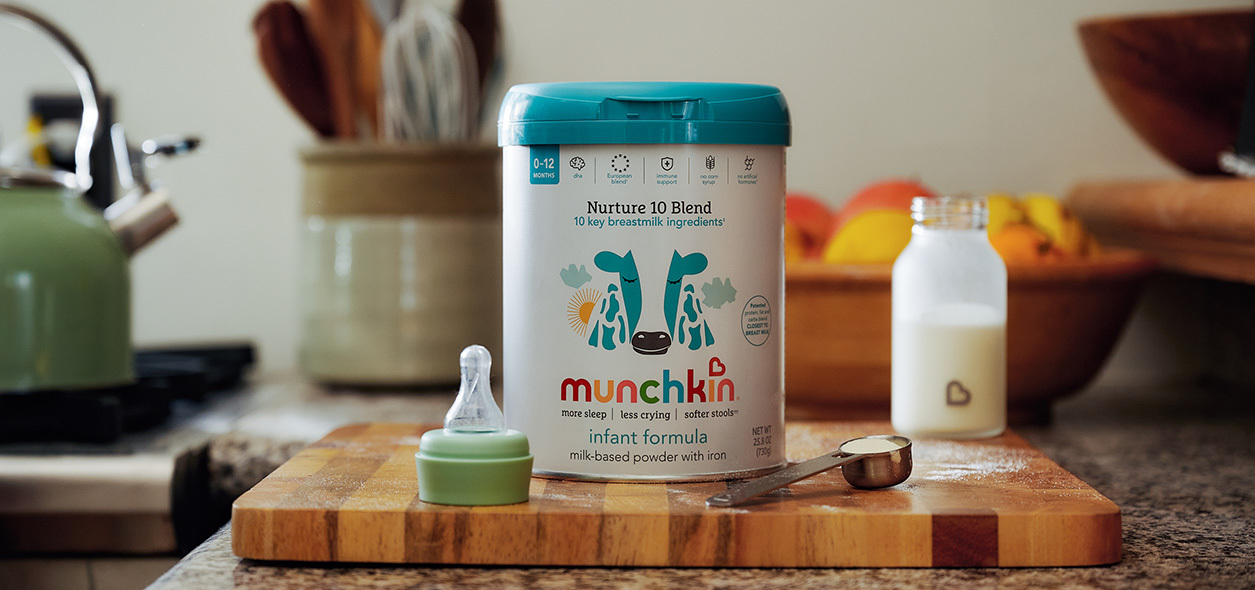
Never add water to ready-to-feed formula, and follow its label after opening. Munchkin® Infant Formula is available only as a powder.
For a complete comparison, read powder formula vs. ready-to-feed formula.
How Do You Keep Formula Cold During Travel?
Place prepared formula or opened liquid formula in an insulated cooler with enough frozen ice packs to maintain a temperature of 40°F or below. Transfer it to a refrigerator as soon as you reach your destination. Cooler performance depends on the amount of ice, ambient temperature, insulation, and how often the cooler is opened.
FoodSafety.gov recommends using enough ice or freezer packs to keep perishable items at 40°F or below during road travel.
These steps can help maintain a safe temperature:
- Refrigerate prepared formula promptly before transferring it to the cooler, and prechill the cooler when possible.
- Place bottles next to frozen ice packs.
- Fill empty cooler space with additional ice packs.
- Keep the cooler closed until you need a bottle.
- Protect it from direct sunlight.
- Keep it in the air-conditioned passenger area rather than a hot trunk when possible.
- Use a cooler thermometer during longer journeys.
A cooler does not provide a fixed safe-storage period. Use a thermometer during longer journeys and discard formula if you cannot confirm that it remained at 40°F or below. Prepare a fresh bottle when dependable cold storage is unavailable.
How Can You Manage Formula on Different Types of Trips?
Keep the supplies for your baby’s next feeding where you can reach them without unpacking the entire travel bag. Divide the remaining bottles and formula into separate feeding sets so one spill does not affect everything you packed.
On a flight
Keep one complete feeding set in the bag under the seat in front of you. Prepare the bottle before your baby becomes very hungry, and keep a burp cloth and resealable bag nearby for spills or used bottle parts. Allow extra time for security screening if you are carrying several feeding containers or cooling accessories.
On a road trip
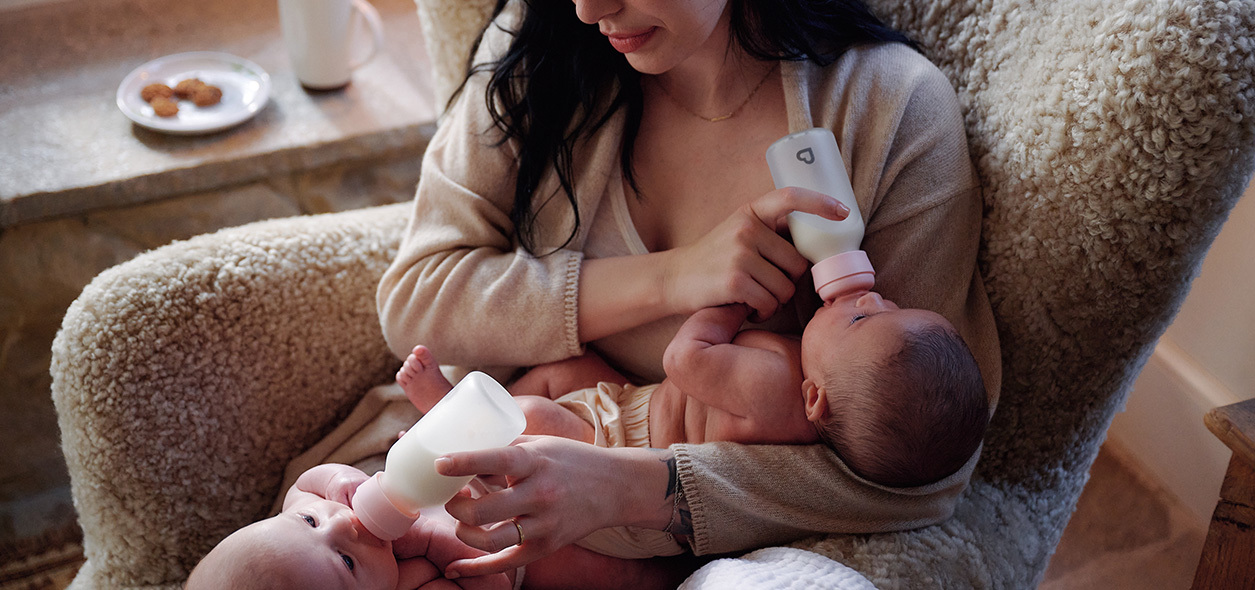
Plan regular stops so an adult can hold and feed your baby while the vehicle is parked. The CDC advises caregivers to hold babies during bottle feeding and never prop or leave a bottle in a baby’s mouth.
Keep formula and bottles in the air-conditioned passenger area when possible, since a parked vehicle or hot trunk can expose them to high temperatures.
During a short day out
Pack used bottle parts in a separate bag so they do not touch clean supplies. Wash them thoroughly when you have access to a suitable sink and clean drying area.
Across time zones, continue following your baby’s hunger and fullness cues rather than imposing a rigid feeding schedule. A simple feeding log can help if jet lag makes recent feeding times difficult to remember.
Browse the Munchkin® infant feeding collection for bottles, formula dispensers, and other feeding supplies.
Pack for possible delays, follow the formula label exactly, and confirm current transportation rules before leaving. With the next feeding organized, you can focus more of the trip on your baby.
Frequently Asked Questions
Can you pack baby formula in checked luggage?
Yes. TSA permits baby formula in checked luggage. However, keep enough formula and feeding supplies in your carry-on for the journey and possible delays. Check destination customs rules before an international trip.
Does baby formula need to be warmed while traveling?
No. The CDC states that infant formula does not need to be warmed. If your baby prefers it warm, place the closed bottle in a container of warm water or hold it under warm running water. Keep water away from the nipple and bottle opening. Test a few drops on your wrist before feeding. Never microwave formula because uneven heating can create hot spots.
How can you clean baby bottles in a hotel room?
Wash your hands, then take the bottle apart completely. The CDC recommends washing feeding items in a clean basin used only for that purpose rather than placing them directly in the sink. Scrub each part with soap, water, and a dedicated bottle brush. Rinse with fresh water and let the parts air-dry fully on a clean, unused towel or paper towel. Do not rub them dry with a dish towel because it can transfer germs.
Should you change your baby’s formula for a trip?
Bring the formula your baby normally uses when possible so you do not introduce an unnecessary feeding change during the trip.. If it will not be available at your destination, ask your pediatrician about an alternative before leaving. Check the new product’s scoop size, mixing ratio, and storage directions because instructions can differ.
This article is for general informational and educational purposes only and is not intended as medical advice. Airport security rules can change, so confirm current TSA (or your country’s) guidance before you travel. Prepare formula with safe water following the label’s instructions, do not use prepared formula that has been left out beyond safe time limits, and ask your pediatrician about the safest options for travel if your baby was born prematurely or has any health condition.
References
- Transportation Security Administration, Breast Milk - https://www.tsa.gov/travel/security-screening/whatcanibring/items/breast-milk
- Transportation Security Administration, Baby Formula - https://www.tsa.gov/travel/security-screening/whatcanibring/items/baby-formula
- U.S. Food and Drug Administration, Cronobacter sakazakii - https://www.fda.gov/food/foodborne-pathogens/cronobacter-sakazakii
- Centers for Disease Control and Prevention, Infant Formula Preparation and Storage - https://www.cdc.gov/infant-toddler-nutrition/formula-feeding/preparation-and-storage.html
- FoodSafety.gov, Seasons Change, but Food Safety Steps Should Not - https://www.foodsafety.gov/blog/seasons-change-food-safety-steps-shouldnt
- Centers for Disease Control and Prevention, About Feeding From a Bottle - https://www.cdc.gov/infant-toddler-nutrition/bottle-feeding/index.html
- Centers for Disease Control and Prevention, How to Clean, Sanitize, and Store Infant Feeding Items - https://www.cdc.gov/hygiene/about/clean-sanitize-store-infant-feeding-items.html
Munchkin