How to Introduce Formula to a Breastfed Baby?
13 min read
Published on 21 Aug 2026

To introduce formula to a breastfed baby, begin with one formula feed at a time and make further changes gradually. Offer the bottle when your baby is calm, use a slow-flow nipple, and continue breastfeeding or expressing milk during the feeds you want to maintain.
When possible, it may be easier to add formula after breastfeeding feels established. However, some babies need supplementation sooner for growth, feeding, or medical reasons, so follow your pediatrician’s guidance when applicable.
Combination feeding is a valid option for families who want or need to add formula while continuing to breastfeed. This guide explains when to begin, how to make the transition, how to protect milk supply, and how to help your baby accept a bottle.
When Should You Introduce Formula to a Breastfed Baby?
When possible, introduce formula after breastfeeding feels comfortable and established, which often takes up to 6 weeks. This can give you and your baby time to settle into nursing before adding a different feeding method. However, there is no single right age or week for every family.
Some parents introduce formula earlier because of work, caregiving needs, personal preference, low milk supply, sleep challenges, or feeding difficulties. Your pediatrician may also recommend supplementation if your baby is not transferring enough milk, is not gaining weight as expected, or has another medical or nutritional need. If supplementation is being introduced for growth, intake, or medical concerns, follow the timing and feeding plan recommended by your pediatrician.
In these situations, follow the amount and feeding schedule recommended for your baby rather than waiting for breastfeeding to become fully established.
If you are returning to work or preparing for regular time apart, begin practicing bottle-feeding a few weeks before the new routine starts. Some experts suggest introducing bottles in the first few months of life to develop comfort with bottle feeds. This gives your baby time to become familiar with the bottle and allows another caregiver to learn their feeding cues.
Speak with your pediatrician or a lactation consultant before changing the feeding plan if your baby was born prematurely, has a health condition, struggles to latch or feed effectively, or has fewer wet diapers than expected.
How Do You Introduce Formula Gradually?
Start by replacing one regular breastfeeding session with one formula feed. Keep the rest of your feeding routine unchanged initially, then give your baby and your body time to adjust before adding another formula feed. If your supply is low, not established, or you are uncomfortable, express breastmilk at the time of the formula feed.
Choose a feeding time that is usually calm and predictable. Your baby may be more willing to try formula when they are alert and showing early hunger cues rather than crying from hunger. Begin with a small amount, let your baby control the pace, and stop when they show signs of fullness.
If your baby has feeding difficulties or growth concerns, use the step-by-step approach below only with pediatric guidance.
How to Introduce One Formula Feed at a Time
There is no single right or wrong way to introduce formula. The steps below offer a general roadmap that parents can adapt to their baby’s needs, feeding goals, and daily routine.
Step 1: Choose one breastfeeding session to replace.
Step 2: Offer formula at approximately the same time each day.
Step 3: Keep the remaining breastfeeding sessions consistent.
Step 4: Follow your baby’s hunger and fullness cues. Use a slow-flow nipple, hold the bottle nearly horizontal, and allow regular pauses so your baby can control the pace of the feed. Pause to burp as needed, and avoid encouraging your baby to finish a set amount.
Step 5: Observe feeding comfort, wet diapers, and any persistent changes.
Step 6: Wait until the new routine feels manageable before replacing another session.
Step 7: Add further formula feeds only when they fit your feeding goals.
Your first formula bottle does not need to replace a feeding session that is already stressful or unpredictable. Some parents begin with a daytime session when both the baby and caregiver are rested. Others choose a feed that will eventually be handled by a partner, family member, or childcare provider.
Combination feeding does not require an equal split between breastmilk and formula. You may offer one formula bottle each day, use formula only while you are away, or supplement after selected breastfeeds under your pediatrician’s guidance.
This gradual approach makes it easier to observe how your baby and milk supply respond.
How Can You Protect Your Milk Supply While Supplementing?
Milk production is influenced by how often milk is removed. When a formula bottle regularly replaces breastfeeding without pumping or hand-expressing, your body may begin producing less milk at that time of day.
If you want to maintain your current supply:
- Breastfeed regularly during the feeds you want to keep.
- Pump or hand-express around the time of a consistently replaced feed.
- Avoid regularly going much longer than usual without breastfeeding or expressing.
- Follow your own body cues to prevent engorgement or clogged ducts.
- Work with a lactation consultant if you need an individualized pumping plan.
Maintaining a full milk supply is not necessary for every combination-feeding routine. You may choose to breastfeed at certain times, such as mornings and evenings, and allow your supply to adjust during feeds regularly replaced with formula.
If you are intentionally allowing your supply to decrease and your breasts become overly full, express only enough milk for comfort.
Seek medical advice if you develop persistent breast pain, a hot or red area, fever, or flu-like symptoms.
Milk removal leads to milk production. If a nursing mother wants to maintain current supply, she should remove milk via pumping or hand expression each time formula is given. Over time, if you remove less milk than an infant needs, this will lead to a gradual downregulation of supply.
Attributed: Ellen Campbell, MD
How Can You Get a Breastfed Baby to Take a Bottle?
Offer the bottle when your baby is calm, alert, and showing early hunger cues. A baby who is already crying, very hungry, or tired may be less willing to try an unfamiliar feeding method.
These tips may make the first attempts easier:
- Ask another familiar caregiver to offer the bottle, especially if your baby expects to breastfeed when you are nearby.
- Hold your baby close in a supported, semi-upright position.
- Touch the nipple gently to your baby’s upper lip and allow them to draw it into their mouth.
- Use a slow-flow nipple and keep the bottle almost horizontal to control the milk flow.
- Pause during the feed and stop when your baby turns away, closes their mouth, or no longer sucks actively.
- Try milk at a familiar temperature at first, usually about body temperature if breastfed.
A slow-flow bottle designed for the breast-to-bottle transition, such as the Munchkin® Bond® Bottle, may be one option to consider. No bottle shape or nipple can guarantee acceptance, and some babies need several attempts before they feel comfortable.
Paced bottle feeding can help your baby stay in control of the feed and respond to their own hunger and fullness cues.
How Much Formula Should You Offer at First?
Start with a small amount and offer more if your baby continues to show hunger cues. Rooting, bringing their hands to their mouth, or turning towards the nipple may signal hunger. Slower sucking, turning away, closing the mouth, or relaxing their hands may signal fullness.
Formula-feeding charts are generally intended for babies receiving only formula, so they may not reflect how much a combination-fed baby needs.
Ask your pediatrician for a specific amount and schedule if formula is being introduced for poor weight gain, low intake, dehydration, premature birth, or another medical concern.
What Type of Formula Should You Introduce?
For most healthy, full-term babies, a standard iron-fortified infant formula is an appropriate starting option unless your pediatrician recommends something different.
When comparing options, it can help to understand how to choose a baby formula based on iron fortification, age suitability, preparation instructions, and your baby’s individual needs.
Do not choose a low-iron formula based on the assumption that it will be gentler. The CDC recommends choosing an iron-fortified infant formula. Updated 2026 guidance from the American Academy of Pediatrics also notes that babies who receive iron-fortified formula during the first year have a lower risk of iron deficiency and iron-deficiency anemia at 12 months.
Specialized formulas may be recommended for premature babies or infants with certain allergies, digestive conditions, or medical needs. Speak with your pediatrician before changing formulas for persistent symptoms, suspected allergy, poor growth, or another medical concern.
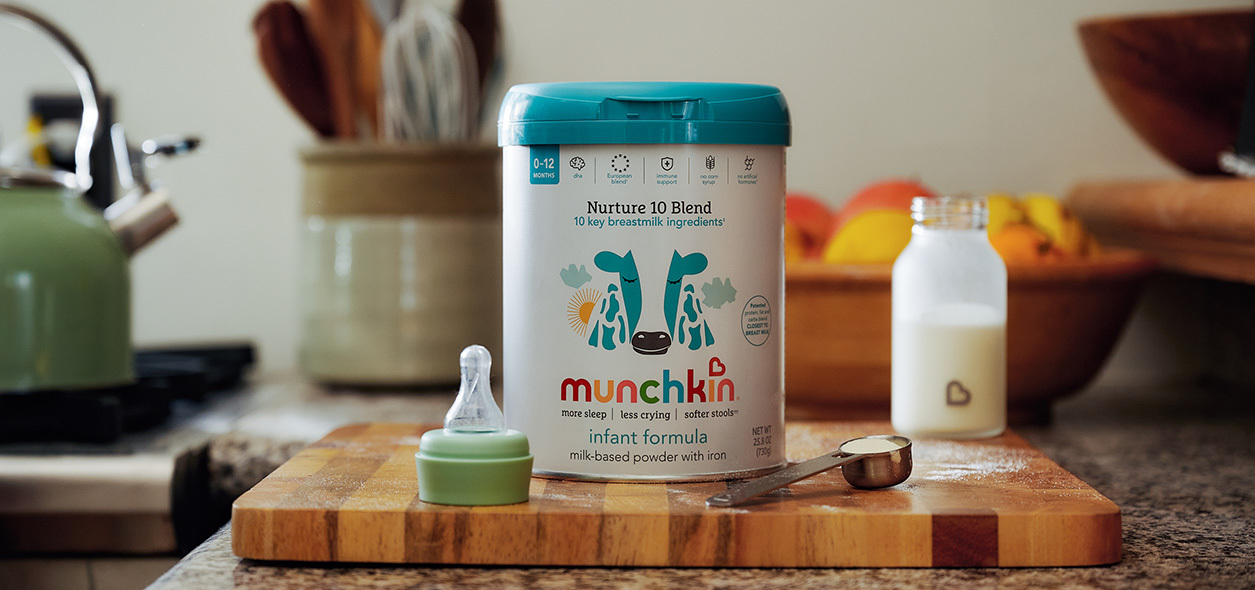
Munchkin Infant Formula is one iron-fortified, cow’s-milk-based, lactose-led option formulated with breastmilk-inspired nutrients.
*Structure and levels differ from those in breastmilk.
Parents often ask whether you can mix breastmilk and formula in the same bottle. Expressed breastmilk and prepared formula may sometimes be combined, but powdered formula must first be mixed with the correct amount of safe water. Always follow the formula label directions exactly, including the stated water-to-powder ratio, and use safe preparation, storage, and discard practices.
What Changes Can You Expect After Starting Formula?
After introducing formula, you may notice changes in stool color, smell, frequency, or consistency, along with shifts in your baby’s feeding pattern. Our guide to formula-fed baby poop: what’s normal explains which stool changes are common and which signs deserve a pediatrician call.
Formula-fed stools are often thicker and stronger-smelling than exclusively breastfed stools, and their color or frequency may also change.
Changes That Can Happen During Adjustment
You may notice:
- A change in stool color, smell, or consistency
- A change in your baby’s usual feeding rhythm
- Mild changes in gas or spit-up
- Temporary hesitation around the bottle or unfamiliar taste
These changes do not automatically mean that the formula is unsuitable. Speak with your pediatrician before switching formulas for ordinary fussiness, gas, or stool changes.
When Should You Contact Your Pediatrician?
Seek medical guidance for blood in the stool, repeated vomiting, persistent diarrhea, fewer wet diapers, ongoing feeding refusal, unusual sleepiness, poor growth, or significant discomfort.
Hives, facial swelling, wheezing, or difficulty breathing require urgent medical care.
What If Your Baby Refuses Formula or the Bottle?
Bottle refusal does not always mean that your baby dislikes formula. The difficulty may involve the bottle-feeding method, nipple flow, unfamiliar taste, or discomfort during feeds.
To narrow down the cause, try offering expressed breastmilk in the same bottle. If your baby refuses that too, the bottle or feeding method may be the issue. If expressed breastmilk is accepted, but formula is not, the unfamiliar taste may be contributing.
Change only one factor at a time so you can see what helps. Avoid forcing the nipple into your baby’s mouth or continuing when they become distressed.
Contact your pediatrician or a lactation consultant if your baby repeatedly refuses feeds, has fewer wet diapers, seems unusually sleepy, appears to be in pain, or is not gaining weight as expected.
How Can Combination Feeding Work Long Term?
Combination feeding can work long term when the routine supports your baby’s nutritional needs, your breastfeeding goals, and your family’s schedule. There is no required balance between breastmilk and formula.
For example, you might:
- Breastfeed in the morning and evening, then use formula while you are at work.
- Keep one regular formula feed for a partner or caregiver.
- Pump during selected missed feeds to maintain milk production at those times.
Your routine may change as your baby grows or your schedule changes. Regular pediatric visits can help confirm that your baby is feeding and growing as expected.
Can You Continue Breastfeeding After Adding Formula?
Adding formula does not mean that breastfeeding has failed or that you need to stop. You can continue the breastfeeding sessions that work for you while using formula where it fits your family’s needs.
If feeding becomes painful, stressful, or difficult, your pediatrician or a lactation consultant can help you find an approach that feels manageable and meets your baby’s nutritional needs.
Frequently Asked Questions
Can a Baby Older Than 6 Months Take Formula From a Cup Instead of a Bottle?
A1. Yes. A baby who is developmentally ready may be able to take formula from an open cup, free-flow cup, or straw cup instead of learning to use a bottle. Some parents use a beginner straw cup, such as the Munchkin® Gentle Transition® First Straw Cup, when an older baby refuses bottles. Breastmilk or infant formula should remain the main drink until 12 months, even after solid foods begin.
Can a Breastfed Baby Start Preferring the Bottle?
Some babies may begin preferring the breast or bottle because the milk flow and sucking pattern differ between feeding methods. Using a slow-flow nipple, pacing bottle feeds, and continuing regular breastfeeds may help your baby adjust to both. However, no feeding method can guarantee that a preference will not develop.
Can You Use Ready-to-Feed Formula for Occasional Supplementation?
Yes, you can use ready-to-feed formula for occasional supplementation. Some families will still carry a preferred, breastfeeding-friendly bottle to transfer the ready-to-feed formula into. If using powdered formula while away from home, follow the formula label directions exactly for preparation, sanitation, safe water, storage, and discard. Do not pre-measure, transport, or mix formula in a way that conflicts with the manufacturer’s instructions or your pediatrician’s guidance.
Can You Use the Same Bottles for Breastmilk and Formula?
Yes. The same clean feeding bottles can be used for expressed breastmilk or infant formula. Wash bottles, nipples, and feeding parts thoroughly after use, and follow the recommended cleaning and sanitizing guidance for your baby’s age and health.
This article is for general informational and educational purposes only and is not intended as medical advice. Breastfeeding is recommended as the best source of nutrition for most infants, and combination feeding is a personal choice. Timing, formula amounts, supplementation for growth or feeding concerns, and formula changes may require individualized guidance. Consult your pediatrician or a lactation consultant if you have concerns about your milk supply, your baby’s feeding or growth, when to introduce formula, or which formula to use, especially if your baby was born prematurely or has a health condition. Structure and levels of nutrients shared with breastmilk differ from those in breastmilk.
References
- Centers for Disease Control and Prevention, What to Expect While Breastfeeding - https://www.cdc.gov/infant-toddler-nutrition/breastfeeding/what-to-expect-while-breastfeeding.html
- Centers for Disease Control and Prevention, About Feeding From a Bottle - https://www.cdc.gov/infant-toddler-nutrition/bottle-feeding/index.html
- Centers for Disease Control and Prevention, Choosing an Infant Formula - https://www.cdc.gov/infant-toddler-nutrition/formula-feeding/choosing-a-formula.html
- American Academy of Pediatrics, Prevention, Screening, Diagnosis, and Treatment of Iron Deficiency in Infants and Children - https://publications.aap.org/pediatrics/article/158/1/e2026077414/207901/Prevention-Screening-Diagnosis-and-Treatment-of
- U.S. Food and Drug Administration, Infant Formula Information for Parents & Caregivers - https://www.fda.gov/food/infant-formula-homepage/infant-formula-information-parents-caregivers

Dr. Elle Campbell
Pediatrician