8 Baby Formula Myths, Debunked
15 min read
Published on 29 Sept 2026
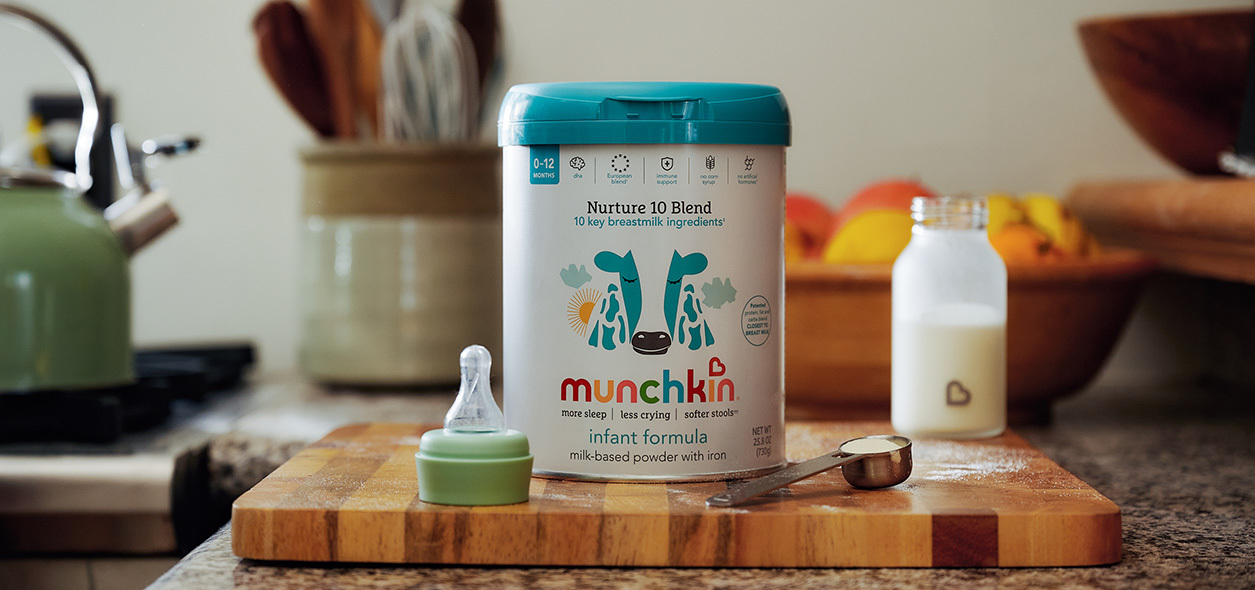
Baby formula myths can add guilt and uncertainty to an already personal feeding decision. Infant formulas legally marketed in the United States must meet federal nutrient and safety requirements, regardless of brand or price.
The American Academy of Pediatrics also explains that the amount of iron in infant formula does not contribute to constipation and that lactose intolerance is uncommon in infants.
This guide examines eight common baby formula myths and separates each claim from facts provided by the FDA, CDC, AAP, and USDA.
What Are the Most Common Baby Formula Myths and Facts?
Here is what FDA, CDC, AAP, and USDA guidance says about eight common formula feeding myths.
|
Myth |
What the evidence says |
Source |
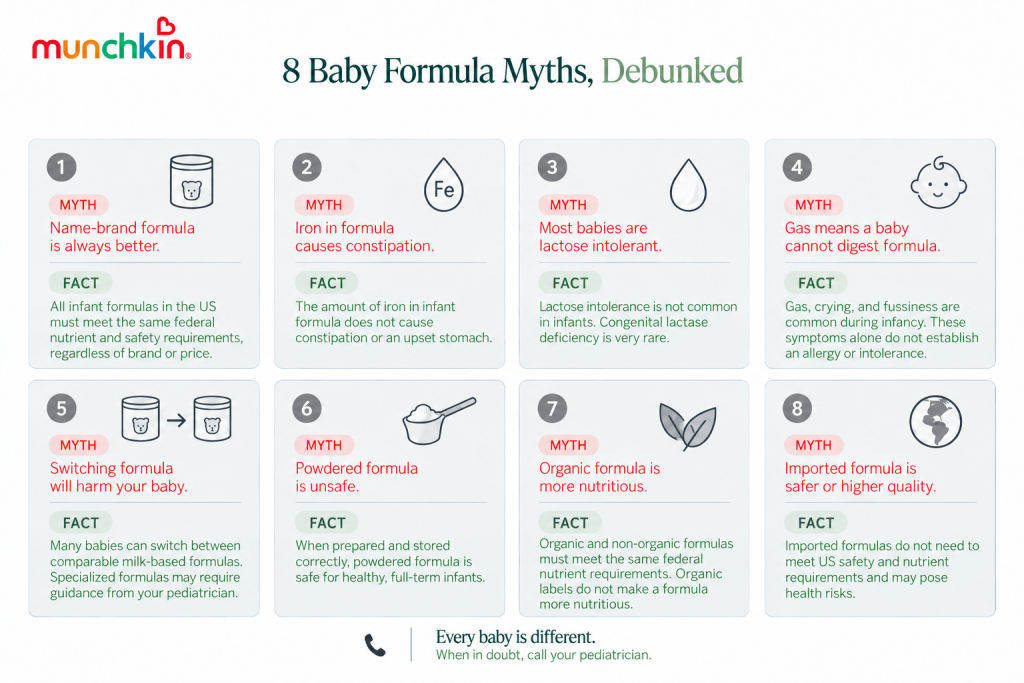
| Name-brand formula is always better. | Brand recognition and price do not determine regulatory compliance. Every infant formula legally marketed in the US must meet federal nutrient and safety requirements, although ingredients can differ. | FDA |
| Iron in formula causes constipation. | The amount of iron in infant formula does not contribute to constipation or an upset stomach. | AAP |
| Most babies are lactose intolerant. | Lactose intolerance is not very common in infants. Congenital lactase deficiency is a very rare inherited disorder. Gas or fussiness alone does not confirm lactose intolerance. | AAP |
| Gas means a baby cannot digest formula. | Gas, crying, and fussiness are common during infancy. These symptoms alone cannot determine an allergy, intolerance, or other feeding problem. | AAP |
| Switching formula will harm your baby. | Many babies can switch between comparable milk-based formulas. Specialized formulas and ongoing symptoms require pediatric guidance. | AAP |
| Powdered formula is unsafe. | Powdered formula is not sterile. Following label directions and safe preparation, storage, and discard practices helps reduce contamination risk. | CDC |
| Organic formula is automatically safer or healthier. | Organic certification covers specific production and handling practices. It does not replace the federal requirements that apply to infant formula sold in the US. | FDA and USDA |
| European formula is always better. | Country of origin alone does not establish that one formula is safer, healthier, or more suitable for a particular baby. Imported infant formulas legally marketed in the US must meet applicable US requirements. | FDA |
Myth 1: Name-Brand Formula Is Always Better
A familiar brand name or higher price does not automatically make one infant formula better than another. The FDA states that all infant formulas marketed in the United States must meet federal nutrient requirements. These requirements apply to both name-brand and store-brand formulas.
This shared regulatory baseline does not mean every formula is identical. Manufacturers may use different protein sources, carbohydrates, fats, and optional ingredients. Products may also differ in price, availability, format, and preparation instructions.
When comparing formulas, consider your baby’s age and health needs, preparation requirements, reliable availability, and long-term cost. Specialized formulas for allergies, metabolic conditions, premature birth, or other medical needs require professional guidance.
Like all infant formulas legally marketed in the US, Munchkin® Infant Formula must meet applicable FDA nutrient and safety requirements. For help comparing formula types, read our guide to choosing a baby formula.
Myth 2: Iron in Formula Causes Constipation
The American Academy of Pediatrics states that the amount of iron in infant formula does not contribute to constipation or an upset stomach. The AAP recommends iron-fortified formula for babies who receive formula.
The AAP describes constipation as involving hard, dry, or painful stools rather than simply fewer bowel movements. Stool frequency and consistency can vary among babies and may change after a feeding transition.
Do not try to manage constipation by changing to a low-iron product unless your pediatrician recommends it. Never dilute formula. Always use the exact water-to-powder ratio on the product label.
Contact your pediatrician if constipation persists or occurs with blood in the stool, vomiting, a swollen abdomen, poor feeding, or unusual discomfort.
Our guide to formula-fed baby poop explains common stool changes in greater detail.
Myth 3: Most Babies Are Lactose Intolerant
According to the American Academy of Pediatrics, lactose intolerance is uncommon in infants. Congenital lactase deficiency, an inherited disorder that begins at birth, is very rare.
The AAP notes that some premature babies may have temporary developmental lactase deficiency and that temporary difficulty digesting lactose can also occur after an intestinal illness. These situations differ from primary lactose intolerance, which is more commonly seen in older children and adults.
Lactose intolerance and cow’s milk protein allergy are different conditions. Lactose intolerance involves difficulty digesting lactose, while cow’s milk protein allergy involves an immune response to milk protein. A healthcare professional should evaluate a suspected food allergy. Gas, crying, spit-up, or stool changes alone cannot confirm either condition because these symptoms can have several causes.
Speak with your pediatrician before moving to a lactose-free or specialized formula. Seek emergency care if your baby has difficulty breathing or another possible sign of a severe allergic reaction. Contact your pediatrician about repeated vomiting, blood in the stool, dehydration, poor feeding, or growth concerns. The AAP explains that milk allergy involves the immune system and can cause a serious reaction.
For more information about common symptoms and signs that require medical care, read our guide to formula-feeding symptoms.
Myth 4: Gas Means Your Baby Cannot Digest Formula
Gas and fussiness do not automatically mean that a baby cannot digest formula. Crying, burping, and passing gas are common during early infancy. Babies may also swallow air during bottle-feeding, especially when milk flows faster than they can comfortably manage.
Before changing formula, review how each bottle is prepared and offered. Follow the label’s exact water-to-powder ratio. The CDC recommends holding your baby close, positioning the bottle at an angle, allowing feeding breaks, and stopping when your baby shows fullness cues.
Contact your pediatrician if discomfort persists, interferes with feeding, or accompanies repeated vomiting or growth concerns.
For practical mixing techniques, read how to mix formula without bubbles.
Myth 5: Switching Formula Always Harms Your Baby
The American Academy of Pediatrics states that many babies can switch to a comparable milk-based formula, including a store brand. However, a formula prescribed or recommended for a specific medical or dietary need should not be replaced without professional guidance.
Check the new container before preparing the first bottle. Scoop sizes and mixing directions can vary, even when two products appear similar. Use only the scoop supplied with that formula, measure the water and powder exactly as directed, and never dilute a bottle to make a transition feel gentler.
Your baby may respond differently to a new taste or formulation. A single change in acceptance or stool pattern does not identify the cause or prove that the new product is harmful.
Consult your pediatrician before replacing an extensively hydrolyzed, amino-acid-based, premature-infant, metabolic, or other specialized formula. Professional guidance is also appropriate when a feeding concern affects hydration, intake, or growth.
Our guide on how to switch baby formula covers the transition in more detail.
Myth 6: Powdered Infant Formula Is Unsafe
Powdered infant formula is not sterile, so careful preparation and storage are important. The CDC explains that powdered formula can occasionally contain germs, including Cronobacter. Liquid ready-to-feed formula is manufactured to be sterile, although caregivers must still follow its label directions for handling and storage.
For most babies, the CDC advises caregivers to prepare powdered formula according to the instructions on the container. Wash your hands with soap and water for at least 20 seconds. Use a clean preparation surface and properly cleaned feeding equipment. Keep the formula scoop, lid, and container clean and completely dry.
Use water from a safe source. Measure the water and powder in the exact amounts listed on the label. Never dilute formula to make it last longer or add extra powder to make it more filling.
Use prepared formula within two hours of making it and within one hour after feeding begins. If feeding will not start immediately, refrigerate the bottle at once and use it within 24 hours. Discard formula left after a feeding because saliva can introduce germs.
Babies younger than 2 months, babies born prematurely, and babies with weakened immune systems face a higher risk of serious Cronobacter infection. The CDC recommends considering ready-to-feed formula for these babies when possible.
If a higher-risk baby receives powdered formula, the CDC recommends boiling water and allowing it to cool for no longer than five minutes. Add the exact amount of powder while the water is still very hot. Then cool the capped bottle to feeding temperature without allowing cooling water to enter the bottle or touch the nipple. Ask your baby’s healthcare professional if you are uncertain about the safest formula format or preparation method.
For complete preparation and storage guidance, read all of your formula-preparation questions answered and how long prepared formula is good for.
Myth 7: Organic Formula Is Automatically Safer or Healthier
Organic infant formula is not automatically safer or healthier than conventional infant formula. Both must meet the FDA requirements that apply to infant formula legally marketed in the United States. Organic certification instead describes how certain agricultural ingredients were produced and handled.
The USDA requires certified organic products to follow defined production practices verified by an accredited certifying agent.
Organic certification and infant-formula regulation address different matters. USDA certification covers production and handling practices. FDA requirements address nutritional adequacy, manufacturing, quality control, and safety.
Organic sourcing may reasonably matter to your family. However, the label alone cannot predict how a baby will tolerate a formula. Organic products can still differ in their protein sources, carbohydrates, fats, optional ingredients, price, and availability.
Review the complete product rather than relying on one certification. If your baby needs a specialized formula, consult your pediatrician before changing products.
Our guide to why families choose organic formula explains what organic certification covers and which other factors parents may want to compare.
Myth 8: European Formula Is Always Better Than American Formula
A formula’s country of origin alone does not establish that it is safer, healthier, or more suitable for a particular baby. European and U.S. formulas may use different ingredients or labeling conventions, but country of origin alone does not establish that one product is safer, healthier, easier to digest, or more suitable for a particular baby.
Imported infant formula legally marketed in the United States is subject to applicable U.S. infant formula requirements. The FDA advises caregivers to use caution when ordering formula from overseas sellers or third-party distributors. Products obtained through unofficial channels may not meet US safety or nutritional requirements.
Labels on unauthorized imports may use another language or measurement system. Scoop sizes and mixing ratios may also differ. Follow the directions supplied with the exact formula. Do not use instructions from another product or an unofficial conversion chart.
“European-style” may describe selected formulation characteristics, but the term does not independently establish safety, nutritional superiority, regulatory status, or suitability for a particular baby.
Confirm that a formula is legally marketed in the US and ask your pediatrician about products intended to address digestive symptoms or medical needs.
Choosing a formula involves more than comparing one label claim. Your baby’s age and health needs, reliable product availability, preparation requirements, and your pediatrician’s guidance all matter.
Facts Over Feeding Guilt
Feeding decisions should come from reliable guidance, your baby’s needs, and advice from their healthcare professional, not pressure or unsupported claims.
Contact your pediatrician when a concern affects feeding, hydration, comfort, or growth. Breast, bottle, or both, responsive care and safe feeding practices can support a calm, connected feeding routine.
Frequently Asked Questions
Is formula feeding bad for bonding?
Feeding method alone does not determine the bond between a parent and baby. The American Academy of Pediatrics describes feeding as an intimate time for both breastfeeding and bottle-feeding families. Hold your baby close, make eye contact, speak softly, and respond to signs of comfort or distress. These repeated interactions help your baby feel safe and cared for.
Does formula make babies sleep longer?
Formula does not guarantee longer sleep. The CDC states that adding infant cereal or other food to a bottle will not make a baby sleep longer and may increase choking risk. Never concentrate formula or add cereal to a bottle to promote sleep unless your pediatrician has prescribed thickening for a medical reason. Follow the product label and speak with your pediatrician about ongoing feeding or sleep concerns.
Can you spoil a newborn by responding to hunger cues?
Responding to hunger cues does not spoil a newborn. The AAP recommends responsive feeding, which means recognizing and responding to a baby’s hunger and fullness cues. Offer a feeding when your baby shows signs such as rooting, hand-to-mouth movements, or restlessness. Pause or stop when your baby shows fullness cues. Premature babies and babies with certain medical conditions may need an individualized feeding schedule from their healthcare team.
Can a baby receive both breastmilk and formula?
Yes. Many families use combination feeding to meet their feeding goals or practical needs. The AAP notes that babies can receive breastmilk, infant formula, or a combination of both, while continuing to recommend breastfeeding when possible. If maintaining breastmilk production is important to you, a pediatrician or lactation consultant can help you plan nursing, pumping, and formula feeds. For safe preparation considerations, read can you mix breastmilk and formula?
This article is for general informational and educational purposes only and is not intended as medical advice. Breastfeeding is recommended as the best source of nutrition for most infants, and formula is a safe, regulated choice when breastfeeding is not possible or chosen. The clarifications here are based on guidance from the FDA, AAP, and CDC; for questions about your baby's specific feeding needs, consult your pediatrician.
References
- U.S. Food and Drug Administration, Questions & Answers for Consumers Concerning Infant Formula - https://www.fda.gov/food/people-risk-foodborne-illness/questions-answers-consumers-concerning-infant-formula
- American Academy of Pediatrics, Choosing a Baby Formula - https://www.healthychildren.org/English/ages-stages/baby/formula-feeding/Pages/choosing-an-infant-formula.aspx
- American Academy of Pediatrics, Lactose Intolerance in Infants & Children: Parent FAQs - https://www.healthychildren.org/English/healthy-living/nutrition/Pages/Lactose-Intolerance-in-Children.aspx
- American Academy of Pediatrics, Colic Relief Tips for Parents - https://www.healthychildren.org/English/ages-stages/baby/crying-colic/Pages/Colic.aspx
- American Academy of Pediatrics, What Should I Know About Recalled Baby Formula? - https://www.healthychildren.org/English/tips-tools/ask-the-pediatrician/Pages/What-should-I-know-about-the-infant-formula-recall.aspx
- Centers for Disease Control and Prevention, Preventing Cronobacter in Infants - https://www.cdc.gov/cronobacter/prevention/
- U.S. Department of Agriculture, USDA Certified Organic: Understanding the Basics - https://www.ams.usda.gov/services/organic-certification/organic-basics
- U.S. Food and Drug Administration, Infant Formula Homepage - https://www.fda.gov/food/resources-you-food/infant-formula-homepage
- American Academy of Pediatrics, 3 Ways You Can Bond With Your Baby - https://www.healthychildren.org/English/ages-stages/baby/Pages/ways-you-can-bond-with-your-baby.aspx
- American Academy of Pediatrics, How Long Can Baby Bottles Sit Out at Room Temperature? - https://www.healthychildren.org/English/tips-tools/ask-the-pediatrician/Pages/how-long-can-baby-bottles-sit-at-room-temperature.aspx
- American Academy of Pediatrics, Your Newborn’s First Week: How to Prepare & What to Expect - https://www.healthychildren.org/English/ages-stages/prenatal/delivery-beyond/Pages/Bringing-Baby-Home.aspx
- American Academy of Pediatrics, Why We Support Breastfeeding for Your Baby’s Health - https://www.healthychildren.org/English/ages-stages/baby/breastfeeding/Pages/Where-We-Stand-Breastfeeding.aspx
Munchkin